Lectio divina: a guide to contemplative Bible reading
In an age of quick consumption, the ancient practice of lectio divina invites us to savor Scripture slowly, allowing it to transform us from within.
TheoScriptura Blog
Theology, Bible study, and spiritual growth grounded in 2,000 years of Christian wisdom.

In an age of quick consumption, the ancient practice of lectio divina invites us to savor Scripture slowly, allowing it to transform us from within.

Explore what Scripture says about fatherhood through key Bible verses, offering insights for Father's Day and beyond.

When the early church gathered to define the Holy Spirit, they were answering a question that had haunted the faithful since Pentecost: is the Spirit a force or a person?

A guide to the most searched Bible verses, explaining familiar passages like John 3:16 in context with theology, history, and deeper meaning.

A biblical guide to loneliness, tracing Genesis, the Psalms, Jesus, Paul, community, God's companionship, and hope for those who feel forgotten.

A comforting guide to Bible verses about grief, lament, mourning, God's nearness, resurrection hope, community care, and prayer when words fail.

A contextual study of Romans 12:2, explaining transformation, renewed minds, resisting conformity, discernment, community, and Christian thought life.

A biblical guide to hearing God's voice through Scripture, prayer, community, silence, obedience, discernment, and the wisdom of Christian tradition.

A clear explanation of justification in Christian theology, using the courtroom metaphor to explore faith, righteousness, grace, works, and Paul's letters.

A Scripture guide to hope in dark seasons, gathering verses from Lamentations, Psalms, Romans, Peter, and the resurrection promise of Christ.

A whole-Bible guide to the Holy Spirit from Genesis to Revelation, including creation, prophecy, Jesus' ministry, Pentecost, sanctification, and intercession.

A biblical guide to death and the afterlife, tracing resurrection, judgment, the soul, eternal life, grief, and the Christian hope beyond the grave.

A context-first study of Philippians 4:13, explaining Paul's contentment, strength in weakness, and why the verse is more than a motivational slogan.

A biblical guide to fasting, tracing Moses, Jesus, the early church, repentance, prayer, justice, spiritual warfare, and discernment.

A clear guide to Pentecost in Acts 2, explaining the Jewish feast, the coming of the Holy Spirit, Peter's sermon, and the birth of the church.

A comforting guide to Bible verses about healing, prayer, sickness, spiritual restoration, community care, and the final hope of wholeness in Christ.

A guide to Ascension Day, explaining Jesus' ascension in Acts 1 and Luke 24, its history, and why Christ's enthronement matters for Christian hope.

A biblical theology of forgiveness, tracing Jesus' teaching, divine grace, repentance, justice, community, and the costly gift of forgiving others.

A careful study of Romans 8:28 in context, explaining what Paul promised, what he did not promise, and how Christian hope holds suffering and providence together.

A Scripture guide for mothers and Mother's Day, gathering verses on honor, nurture, wisdom, Mary, spiritual legacy, and the calling of motherhood.

A line-by-line guide to the Lord's Prayer in Matthew 6 and Luke 11, explaining its meaning for worship, daily bread, forgiveness, temptation, and hope.

A Scripture-grounded guide to suffering and faith, tracing Peter, Isaiah, Paul, Christ's example, endurance, hope, and God's presence in affliction.

Thirty Bible verses about strength for hardship, weakness, courage, and endurance, each paired with short commentary and links for deeper study.

A beginner-friendly guide to studying the Bible with observation, interpretation, context, prayer, community, and simple habits that make Scripture easier to understand.

1 Samuel has 31 chapters. The book follows three central figures — Samuel, Saul, and David — through one of the most pivotal transitions in Israel's history: the move from judges to kings. Here is a complete guide to the book's structure and most important passages.

When Jerome translated Psalm 23, he made a choice we're still living with: rendering 'want' as 'lack.' This choice speaks volumes about our understanding of wealth and stewardship in the Bible.

Grace is the thread that runs through the tapestry of Christian theology, weaving together salvation, forgiveness, and divine love. But what does it truly mean?

Jeremiah 29:11 was written to exiled Israel around 597 BC, promising restoration after 70 years in Babylon. Modern readings often miss the verse-10 context. Here is what Calvin, Henry, and Wesley actually say about the verse.

Explore the Bible's teachings on anxiety and worry, delving into Scripture's profound answers for the anxious mind and heart.

Build a Christian prayer life with Scripture, church-father wisdom, and simple daily rhythms for your kitchen table, commute, or quiet morning.

What does Isaiah 41:10 mean in context? Learn what God promises Israel in exile and how Christians can receive its comfort today.

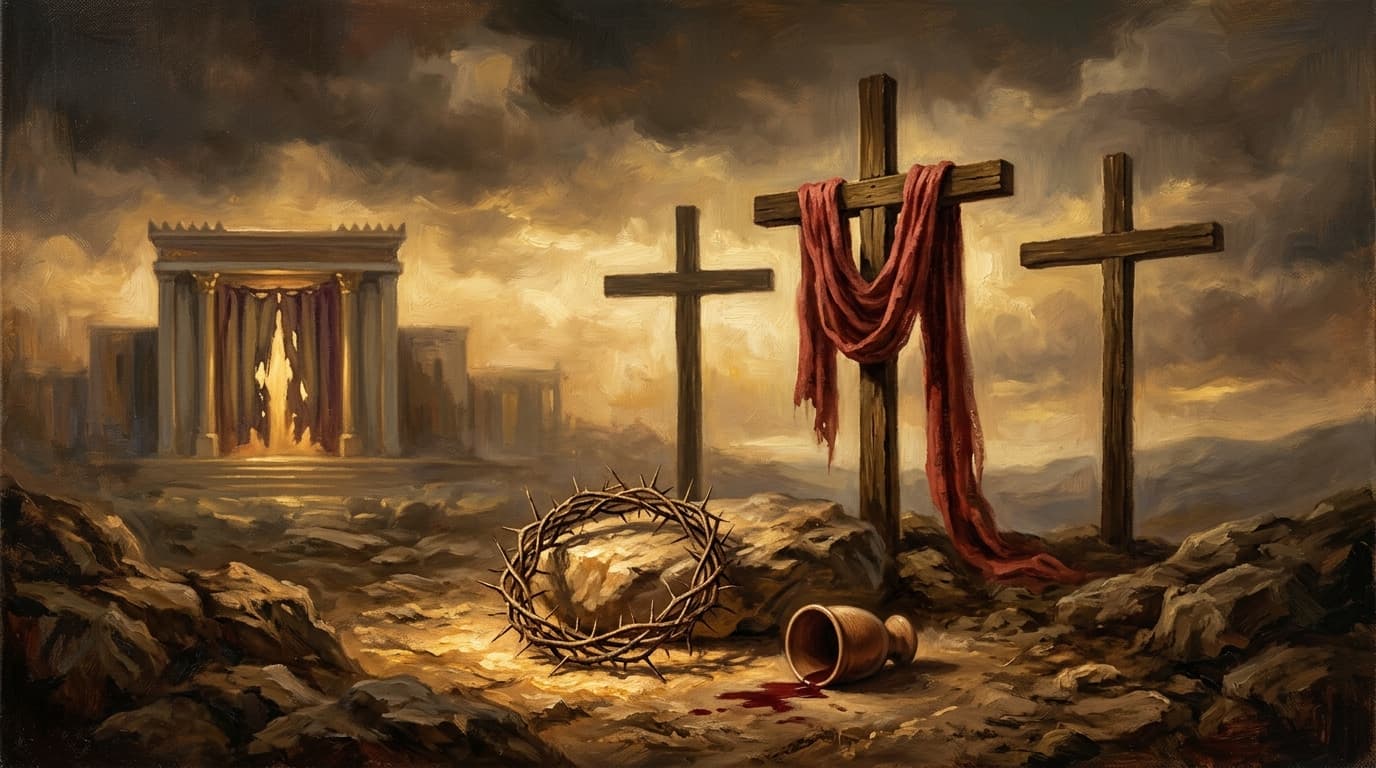
Explore the profound events of Good Friday, from the crucifixion of Jesus to the mysterious darkness and the tearing of the temple curtain. This day reshaped the spiritual landscape forever.

What does the Bible say about suffering, death, doubt, evil, money, and forgiveness? Explore Scripture's honest answers without easy slogans.

Compare the earliest sources for Jesus' resurrection, including Paul, 1 Corinthians 15, the Gospels, Acts, and early Christian witnesses.

Learn how to comfort someone as a Christian with biblical presence, prayer, lament, and practical love when words feel too small.

What is Easter and why does it matter? Explore the history, biblical roots, and theology of the Christian celebration of Christ's resurrection.

Good Friday remembers Jesus' crucifixion and death. Learn why Christians call the day good and how the cross shapes forgiveness, suffering, and hope.

Jesus' command to turn the other cheek refers to a specific Jewish cultural insult — a backhand strike from a superior. Three modern readings (Tolstoy, Bonhoeffer, MacArthur) and what the saying actually meant in first-century Judea.

Scholars count between 3,573 and 8,810 promises in the Bible. This catalog organizes the major promises by theme — salvation, comfort, presence, provision, protection, guidance, eternal life — with primary-source commentary from Calvin, Matthew Henry, and Wesley.

The Bible was written in Hebrew, Aramaic, and Greek. See where each language appears and why the original languages matter.

Hesed is the Hebrew word for steadfast love, covenant loyalty, and loyal mercy. Learn what it means, why translations vary, and where it appears in Scripture.

Biblical justice means setting things right according to God's character. Learn mishpat, righteousness, mercy, and why justice is more than punishment.