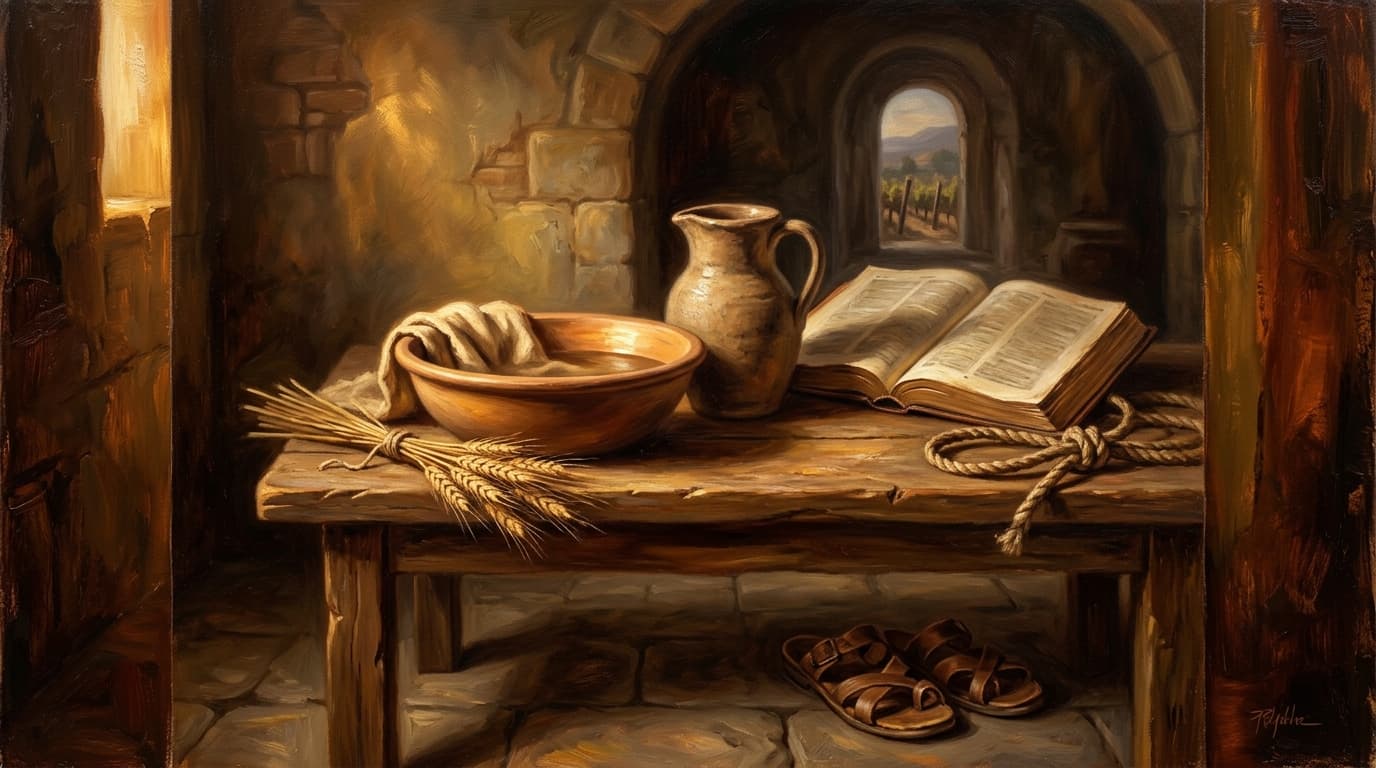
Exploring the meaning of Galatians 5:22-23
When Paul speaks of the 'fruit of the Spirit' in Galatians 5:22-23, he describes traits that naturally emerge in a life transformed by divine influence. These are not individual qualities to be attained but a collective manifestation of a life aligned with the Spirit.
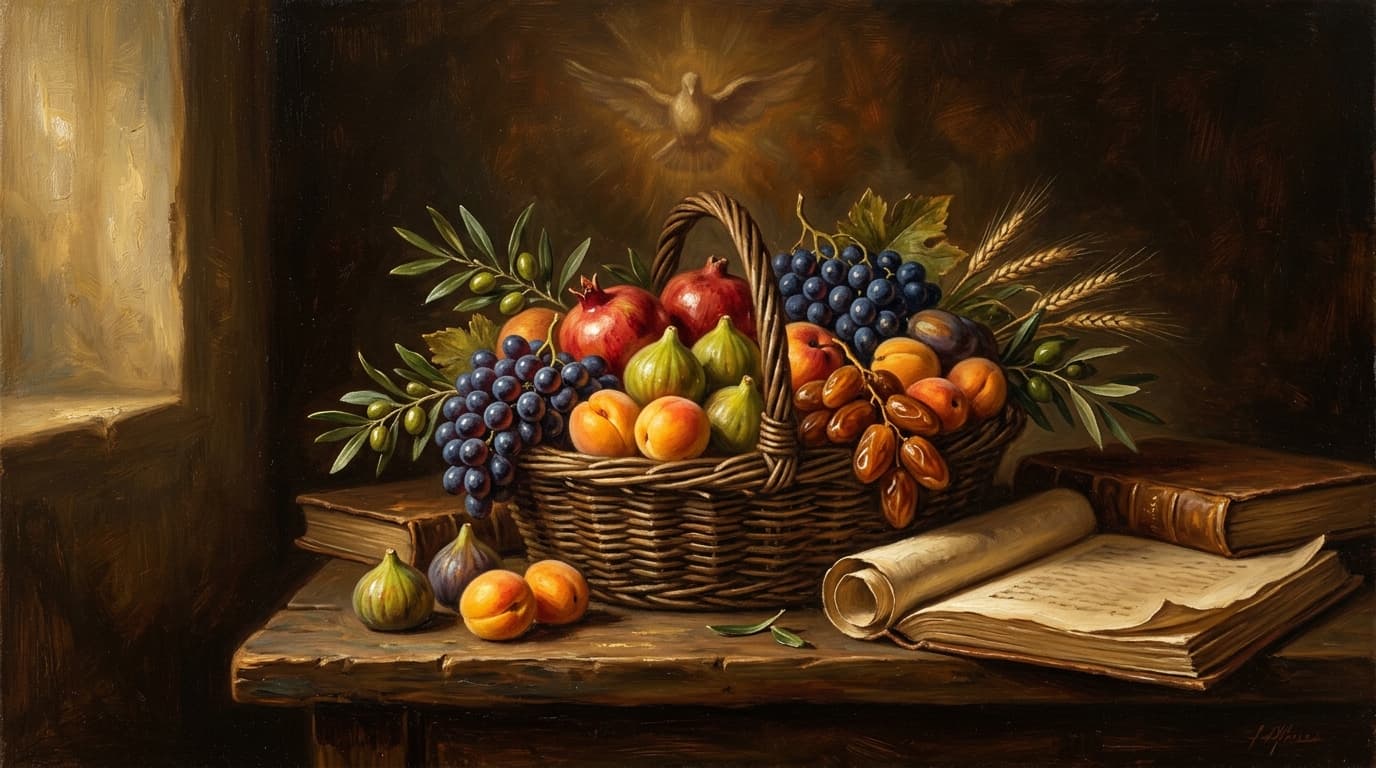
Suppose you wander into a vineyard at harvest time. The air is heavy with the scent of ripe grapes, each bunch hanging as evidence of the vine's health. Similarly, when Paul speaks of the "fruit of the Spirit" in , he describes traits that naturally emerge in a life transformed by divine influence. These are not individual qualities to be attained but a collective manifestation of a life aligned with the Spirit.
The fruit of the Spirit: a collective portrait
One might object that the fruit of the Spirit, love, joy, peace, patience, kindness, goodness, faithfulness, gentleness, self-control, are mere ideals, unattainable by flawed, human effort. But consider: Paul is not listing virtues for us to pursue individually. Instead, he paints a portrait of what a Spirit-led life organically produces. The Greek word used here, "karpos," implies a singular fruit, suggesting unity and interdependence of these virtues.
In , the Apostle contrasts the Spirit's fruit with "works of the flesh," a term used to describe actions borne out of human frailty and sinfulness. While the works of the flesh are plural, indicating disunity and fragmentation, the fruit of the Spirit is singular, symbolizing harmony and wholeness.
Love: the first among equals
Love, as the first fruit, is the root from which all other virtues grow. This is not the fleeting emotion often romanticized in culture but "agape," an unconditional, self-giving love that mirrors God's love for humanity. Martin Luther once said in his Commentary on Galatians that love is the essence of the law fulfilled (1535).
The Apostle Paul famously elaborates on this in , where love is patient, kind, and rejoices with the truth. Thus, love is a deliberate choice to act in the best interest of others, even to one's detriment. It is the foundation from which joy, peace, and the other fruits arise.
Joy and peace: the internal state
Consider joy as the deep-seated gladness independent of circumstance. It is not mere happiness, which is often contingent on external conditions. In , Paul exhorts believers to "rejoice in the Lord always." This joy stems from a relationship with God and is a byproduct of recognizing divine grace at work in the world.
Peace follows, not as the absence of conflict but as a profound sense of wholeness and well-being. It is the "shalom" of the Old Testament, a holistic peace that encompasses all aspects of life. In , Jesus offers a peace unlike what the world gives, suggesting a tranquility rooted in divine presence and promise.
Patience and kindness: outward expressions
Patience, or "long-suffering," is the ability to endure hardships without succumbing to frustration or anger. It reflects God's patience with humanity, as expressed in , where God is patient, not wanting anyone to perish.
Kindness, often underrated, is love in action. It manifests in small gestures of goodwill and compassion. Charles Spurgeon described it as a "sweetness of temper" that disarms hostility. It is the gentle hand that helps others back to their feet, the whisper of encouragement in a moment of despair.
Goodness and faithfulness: integrity and loyalty
Goodness is moral integrity in action, reflecting God's own nature. It is doing what is right, even when it is inconvenient or costly. John Wesley emphasized the importance of "doing all the good you can," recognizing that true goodness often requires sacrifice.
Faithfulness, meanwhile, is the steadfast commitment to God and others. It is reliability in the face of temptation or trial. In , believers are called to hold unswervingly to the hope professed, for He who promised is faithful.
Gentleness and self-control: strength under restraint
Gentleness, or "meekness," is not weakness but controlled strength. It is the ability to respond with kindness to provocation without losing one's composure. Jesus embodies this in , where he describes himself as "gentle and humble in heart."
Self-control is the Spirit's work in guiding desires and actions, ensuring they align with God's will. It requires discipline and foresight, acknowledging that not all that is permissible is beneficial. In , Paul compares the Christian journey to an athlete's disciplined preparation.
Common misunderstandings and challenges
Some might argue the fruit of the Spirit is merely aspirational, a moral checklist for the devout. However, this view overlooks the Spirit's transformative role. As Jonathan Edwards notes in his Treatise on Grace, the Spirit is the author of these virtues, signifying divine transformation.
Moreover, the presence of these traits does not imply perfection. Rather, they are signs of an ongoing process, a journey towards spiritual maturity. As Spurgeon observed, these traits might strain against the flesh, but their very struggle is a testament to the Spirit's work.
The contrast between the flesh and the Spirit
The Apostle Paul, in his letter to the Galatians, sharply contrasts the works of the flesh with the fruit of the Spirit, setting the stage for understanding the transformative nature of life in the Spirit. Paul lists the "acts of the flesh" as sexual immorality, impurity, debauchery, idolatry, and other sins (see ). This list is a stark backdrop against which the fruit of the Spirit shines, illustrating the profound change that occurs when one lives according to the Spirit rather than the flesh.
The works of the flesh are acts that originate from human nature in its fallen state, often resulting in division, destruction, and despair. In contrast, the fruit of the Spirit reflects a life aligned with God's will, characterized by virtues that build up individuals and communities. The theologian Augustine of Hippo emphasized the internal battle between these two natures, noting that "we are not what we ought to be, but we are renewed day by day" through the Spirit.
This contrast also serves a pedagogical purpose, urging believers to evaluate their lives continually. Paul's exhortation to "walk by the Spirit" (see ) implies an active, ongoing decision to reject the flesh's desires in favor of spiritual growth. This choice is not merely moral but deeply relational, as it involves surrendering one's will to God's transformative power. The life of the Spirit is not about human effort alone but about allowing the Spirit to cultivate these virtues within us, which becomes evident in our actions, thoughts, and relationships.
The role of community in cultivating the fruit
The fruit of the Spirit is not cultivated in isolation but within the context of community. The early Christian communities, as depicted in the New Testament, provide a model for how communal life can act as fertile ground for spiritual growth. In , the early believers met regularly, shared resources, and lived in harmony, exemplifying the Spirit's work among them.
Dietrich Bonhoeffer, in his work "Life Together," underscores the importance of community in the Christian life. He asserts that "the physical presence of other Christians is a source of incomparable joy and strength to the believer." Community provides accountability, encouragement, and opportunities to practice the virtues of the Spirit, such as patience, kindness, and gentleness, in real-life situations.
Through shared worship, service, and fellowship, believers are challenged to move beyond superficial relationships to deeper, Spirit-driven interactions that reflect Christ's love. The fruit of the Spirit is most evident in how believers treat one another, forgiving and bearing with each other as members of one body (see ).
Moreover, community provides a space for mutual edification, where spiritual gifts complement the fruit of the Spirit. As Paul writes in , "to each is given the manifestation of the Spirit for the common good." The fruit of the Spirit, cultivated in community, thus becomes a testament to the Spirit's presence and power among believers.
Theological implications of the fruit of the Spirit
The fruit of the Spirit carries significant theological implications, particularly concerning sanctification, the process by which believers are made holy. This concept, central to Christian theology, is deeply intertwined with the cultivation of the Spirit's fruit. As believers grow in virtues such as love, joy, and peace, they are gradually conformed to the image of Christ, reflecting God's righteousness in their lives.
John Calvin, a prominent Reformation theologian, emphasized that the fruit of the Spirit is evidence of the Spirit's sanctifying work within believers. In his "Institutes of the Christian Religion," Calvin argues that the Spirit "renews us unto holiness," enabling us to bear fruit that glorifies God. This is not a passive process but involves active cooperation with the Spirit, as believers daily choose to yield to God's transformative work.
The fruit of the Spirit also has eschatological significance, pointing to the ultimate fulfillment of God's kingdom. In , Paul speaks of believers as having "the firstfruits of the Spirit," suggesting that the virtues we cultivate now are a foretaste of the perfect love, joy, and peace that will characterize the new creation. The fruit of the Spirit thus is both a present reality and a future hope, motivating believers to live in anticipation of God's coming kingdom.
also, the cultivation of the fruit of the Spirit challenges believers to engage in ethical reflection and action. The virtues listed by Paul are not merely personal traits but have social and communal dimensions, calling believers to advocate for justice, peace, and reconciliation in the world. As N.T. Wright notes, the fruit of the Spirit equips believers to be agents of transformation, reflecting God's love and justice in tangible ways.
The interplay between spiritual gifts and the fruit of the Spirit
While the fruit of the Spirit represents the character qualities developed in believers, spiritual gifts are the abilities given by the Spirit to serve the body of Christ. Understanding the relationship between these two aspects of the Spirit's work is essential for a holistic approach to Christian life and ministry.
In , Paul outlines a variety of spiritual gifts, emphasizing their diversity and unity in the Spirit. While these gifts are given for the common good, they must be exercised in love, the first fruit of the Spirit, to be effective and edifying. Without the fruit of the Spirit, particularly love, spiritual gifts can become self-serving or divisive, as seen in the Corinthian church's struggles.
Jonathan Edwards, an influential theologian, argued that the fruit of the Spirit provides the moral and ethical foundation for the exercise of spiritual gifts. In his treatise "Charity and Its Fruits," Edwards contends that love, as the preeminent fruit, should guide the use of all gifts, ensuring they build up the church and glorify God. The fruit of the Spirit thus acts as a check against the misuse of spiritual gifts, ensuring that they serve their intended purpose.
The cultivation of the fruit of the Spirit also enhances the effectiveness of spiritual gifts. As believers grow in virtues like patience and gentleness, they are better equipped to minister to others, offering counsel, encouragement, and service with humility and grace. This interplay between the Spirit's fruit and gifts enriches the life of the church, fostering an environment where believers can thrive in their unique callings.
The transformative power of the Spirit in diverse contexts
The fruit of the Spirit is not limited to any particular cultural or social context but is universally applicable, transcending barriers of language, ethnicity, and tradition. This universality underscores the Spirit's work in uniting diverse communities within the body of Christ, as emphasized by Paul in , where he declares that "there is neither Jew nor Gentile, slave nor free, male nor female, for you are all one in Christ Jesus."
In various cultural contexts, the expression of the Spirit's fruit may differ, reflecting the unique challenges and opportunities each setting presents. For instance, in communities facing persecution, the Spirit's fruit of peace and patience becomes a testimony to the believers' steadfast faith and hope. In contrast, in affluent societies, the fruit of self-control and gentleness might challenge believers to live counter-culturally, resisting materialism and individualism.
Theologian Lamin Sanneh highlights the adaptability of the Christian message, noting that the Spirit empowers believers to bear fruit in ways that resonate with their cultural realities. This adaptability does not dilute the gospel's truth but enriches it, demonstrating the Spirit's power to transform lives across diverse settings.
also, the cultivation of the Spirit's fruit in diverse contexts contributes to the global church's witness. As believers embody love, joy, and peace in their communities, they offer a compelling testimony to the world of the gospel's reconciling power. This witness is crucial in a fragmented world, pointing to the unity and hope found in Christ.
Practical steps for cultivating the fruit of the Spirit
Cultivating the fruit of the Spirit requires intentionality and dedication, as believers seek to align their lives with the Spirit's transformative work. While the Spirit ultimately produces these virtues, individuals are called to actively participate in this process through spiritual disciplines and practices that foster growth.
Prayer is foundational in cultivating the fruit of the Spirit, as it opens our hearts to God's work and aligns our desires with His will. In , Paul encourages believers to present their requests to God with thanksgiving, promising that His peace, a fruit of the Spirit, will guard their hearts and minds. This practice of prayer cultivates a posture of dependence and receptivity to the Spirit's leading.
Engaging with Scripture is another vital component, as it provides the wisdom and guidance needed to grow in the Spirit's fruit. Through meditation on passages like , believers are reminded to "clothe themselves with compassion, kindness, humility, gentleness, and patience." This scriptural engagement transforms the mind and shapes character, as believers internalize God's truth and apply it to their lives.
Community involvement also plays a crucial role in cultivating the fruit of the Spirit. As believers interact with others in the body of Christ, they have opportunities to practice virtues like patience, kindness, and gentleness in real-world contexts. Accountability relationships and small groups can provide support and encouragement, helping individuals remain committed to their spiritual growth journey.
Finally, service and mission offer practical avenues for expressing the fruit of the Spirit. As believers engage in acts of love and compassion, they reflect the Spirit's work in their lives and witness to the world of God's transformative power. Service not only benefits others but also deepens the believer's own experience of the Spirit's fruit, reinforcing the truth that "it is more blessed to give than to receive" (see ).
Conclusion: a Spirit-formed life
Imagine again the vineyard: vines laden with clusters of fruit, each grape a testament to the vine's health. This is the image Paul offers of a Spirit-formed life. These virtues are not burdensome commands but the natural fruit of a life deeply rooted in God.
In reflecting on , we are invited to examine the fruit in our own lives. Are they signs of the Spirit's presence? If not, the answer is not in striving harder but in drawing nearer to the source, allowing the Spirit to cultivate these fruits in and through us.