Exploring the meaning of 2 Timothy 1:7
In 2 Timothy 1:7, Paul reminds us that God has given us a spirit not of fear, but of power, love, and self-discipline. What does that mean for us today?
When you hear the phrase "spirit of fear," what comes to mind? Perhaps a moment from childhood when the shadows in your room seemed to come alive, or maybe more recent fears about the future, health, or relationships. Fear, as ancient as time, is an emotion we all know too well. Yet, in , Paul writes to Timothy, "For God has not given us a spirit of fear, but of power and of love and of a sound mind." This verse challenges us to see fear in a new light and invites us to embrace a different spirit, one filled with power, love, and self-discipline.
The context of 2 Timothy
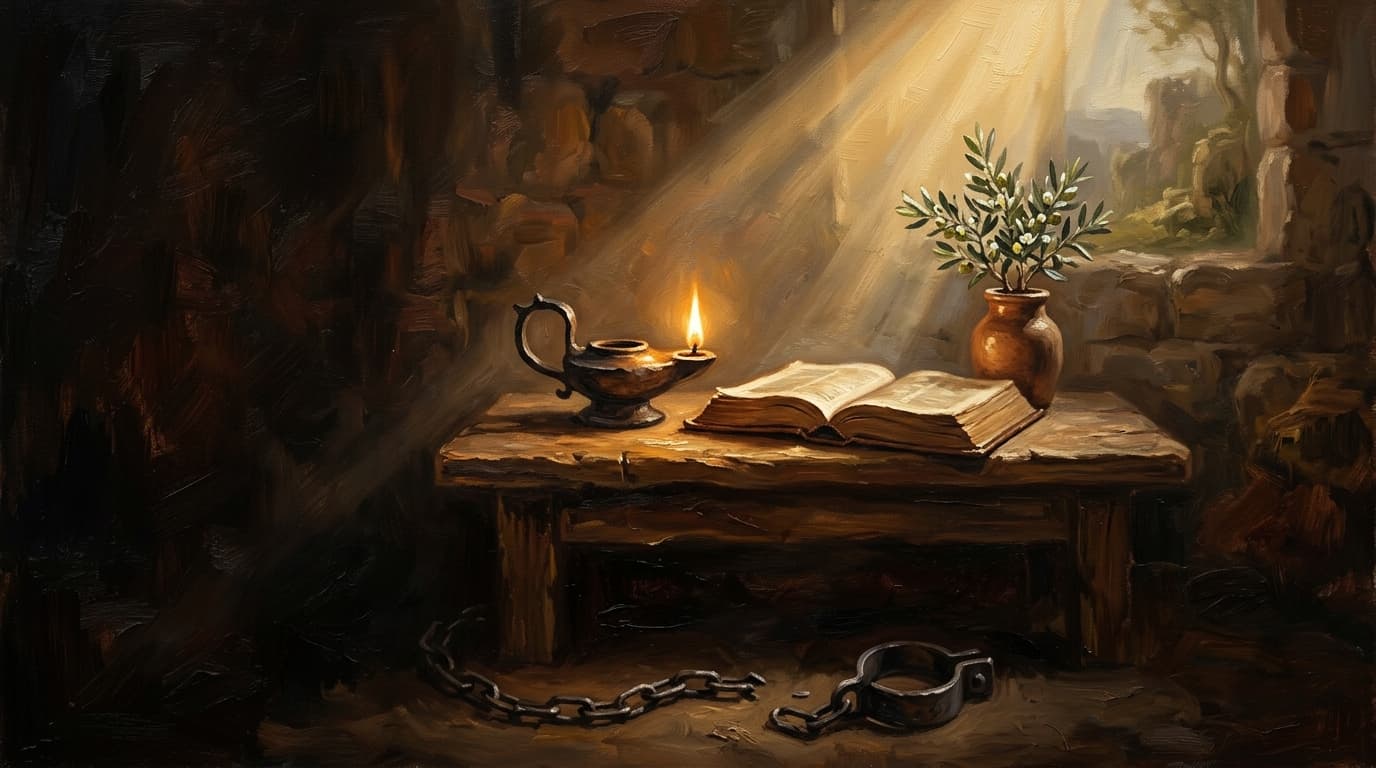
Before delving into the meaning of this verse, it's vital to understand the context. Paul writes this second letter to Timothy from a Roman prison, aware that his life is nearing its end. This letter, therefore, carries the weight of a final message, urging Timothy to hold steadfastly to his faith and calling.
The Roman Empire was no friend to Christians at the time. Persecution was rampant, and the early church faced significant challenges. Paul himself had faced countless trials, including beatings, imprisonment, and stoning. Yet, despite all this, he writes with a remarkable absence of fear. Instead, he encourages Timothy to live boldly, suggesting that the Holy Spirit equips believers with courage and strength.
Not a spirit of fear
One might object that overcoming fear is easier said than done, especially in today's world, where anxiety seems to lurk around every corner. But consider how fear operates. It whispers lies that paralyze and prevent action, sowing doubts about our abilities and God's presence. Fear tells us we are alone, weak, and incapable.
And yet, Paul insists that this spirit of fear is not from God. The Greek word used here can be translated as "timidity" or "cowardice," implying a fear that shrinks back from challenges. This is not the spirit God gives us. Instead, God offers us a spirit that emboldens.
Embracing a spirit of power
Power in this context is not about domination or control. It is about the strength to face adversity with confidence, knowing that our strength is not our own but comes from God. In , Paul declares, "I can do all this through him who gives me strength." This power is about resilience and the ability to act in the face of fear.
Think of a ship navigating stormy seas. Without power, it would be at the mercy of the waves, tossed and battered until it succumbs. But with the power of a strong engine and skilled crew, it can cut through the storm with purpose. Similarly, this spirit of power equips us to move forward, even when circumstances are challenging.
A spirit of love
Love, as mentioned in , is not merely an emotion but a guiding principle. It's the kind of love that calls us to consider others before ourselves, to act in compassion and kindness. Love casts out fear, as beautifully articulates: "There is no fear in love, but perfect love drives out fear."
This love is active and transformative. It enables us to reach out, support, and build community, even in hostile environments. Paul exemplifies this love in his letters, continually encouraging and guiding the early churches with patience and care.
A spirit of self-discipline
Self-discipline, or "a sound mind," as some translations put it, is the ability to control one's thoughts and actions. It is the mental clarity and focus that helps us make wise decisions, even when emotions run high.
In a world overflowing with distractions and temptations, self-discipline is crucial. It allows us to prioritize what truly matters and maintain our course, much like a pilot who remains focused on the destination despite turbulent skies.
Applying these truths today
How can we apply this verse in our daily lives? First, it's essential to recognize the presence of fear and name it. Once fear is identified, we can confront it with the truth that God has not given us this spirit.
Secondly, we must actively cultivate the spirit God has given us. This means seeking God's strength in prayer, practicing love in our interactions, and exercising self-discipline in our habits.
Imagine waking each day with the conviction that you possess the power to face challenges, the love to build meaningful connections, and the self-discipline to pursue your goals. How might this transform your approach to life?
Historical understanding of spirit in early Christianity
In early Christianity, the concept of "spirit" was deeply intertwined with the indwelling of the Holy Spirit, which was believed to empower believers to live in a manner that reflected the teachings of Jesus Christ. The early church fathers, such as Augustine and Origen, emphasized the role of the Holy Spirit not only as a source of divine power but as a guide to living a life of sanctity and righteousness. Augustine, in his work "On the Trinity," elucidates that the Holy Spirit is the bond of love between the Father and the Son and that this same Spirit is imparted to believers, enabling them to live out their faith effectively.
In , the Apostle Paul speaks of a spirit of power, love, and self-discipline. This triad reflects the transformative power of the Holy Spirit in the believer's life. The early Christian communities understood this as a radical departure from the spirit of fear that dominated the cultural and religious ethos of the time. The spirit of power granted believers the courage to face persecution, the spirit of love fostered a sense of community and charity, and the spirit of self-discipline enabled them to resist the moral and ethical temptations of the Roman world.
The early Christian understanding of spirit was not merely a theological construct but a lived reality. The Acts of the Apostles recounts numerous instances of believers being filled with the Spirit, resulting in bold public witness and miracles (). Thus, the spirit Paul refers to in 2 Timothy is both a personal and communal experience, shaping the identity and mission of the early church.
Theological implications of power, love, and self-discipline
Theologically, the triad of power, love, and self-discipline in offers a comprehensive framework for understanding the Christian life. The concept of power is not about domination or control but is rooted in the divine ability to act righteously and courageously in the face of opposition. Karl Barth, a prominent 20th-century theologian, argued that true power in Christianity is manifested in weakness and vulnerability, echoing Paul's assertion that God's power is made perfect in weakness ().
Love, in this context, is agape, unconditional and selfless love that mirrors the love of Christ. This love is the foundation of Christian ethics and community life. Theologian Thomas Aquinas emphasized that love is the greatest of the theological virtues, binding together all other aspects of Christian living. It is the love that compels believers to serve others and to seek justice and mercy.
Self-discipline, or a sound mind, speaks to the internal regulation of one's desires and actions in alignment with God's will. This aspect is crucial for maintaining spiritual and moral integrity in a world that often promotes contrary values. John Calvin highlighted the importance of self-discipline in his "Institutes of the Christian Religion," describing it as essential for maintaining order and piety in the believer's life.
Together, these elements form a holistic vision of the Christian life, one that is empowered by the Spirit to live out God's purposes in the world. This triad challenges believers to reflect on how they embody these qualities in their daily lives and interactions with others.
Cultural challenges and the spirit of God
The modern cultural landscape presents numerous challenges that can obscure the understanding and expression of the spirit of power, love, and self-discipline. In a society often characterized by individualism, consumerism, and relativism, the virtues outlined in offer a countercultural approach to life.
Consumerism, for instance, promotes a spirit of accumulation rather than generosity. The spirit of love, as described by Paul, calls for a radical departure from this mindset, encouraging believers to practice selfless giving and community support. The apostle John reminds us that "if anyone has material possessions and sees a brother or sister in need but has no pity on them, how can the love of God be in that person?" ().
Relativism, which often denies absolute truths, challenges the Christian commitment to a disciplined life guided by biblical principles. The spirit of self-discipline empowers believers to hold fast to their convictions amidst shifting cultural norms. As Paul exhorts in his letter to the Romans, believers are to "be transformed by the renewing of your mind" ().
The spirit of power, when misunderstood, can be conflated with worldly power and control. However, the biblical understanding is one of empowerment for service and witness, as demonstrated by Jesus Christ, who "did not come to be served, but to serve" ().
In navigating contemporary cultural challenges, the spirit of God as described in 2 Timothy provides a framework for living authentically and faithfully. It encourages believers to engage with the world not by conforming to its patterns but by transforming it through divine empowerment and guidance.
Pastoral perspectives on nurturing the spirit
From a pastoral standpoint, nurturing the spirit of power, love, and self-discipline in a congregation requires intentional teaching and discipleship. Pastors and church leaders play a vital role in helping believers understand and apply these spiritual attributes in their lives.
The Apostle Paul himself was a model of pastoral care, mentoring Timothy and encouraging him to "fan into flame the gift of God" (). In contemporary settings, pastors can facilitate this through various means. Regular Bible study and small group discussions provide opportunities for believers to explore and internalize Scripture, developing a deeper understanding of their spiritual gifts and how to use them effectively.
Moreover, the church community is a support system where love is practiced and experienced. Pastors can encourage acts of service, fostering an environment where believers can exercise their gifts and grow in love. Theologian Dietrich Bonhoeffer, in "Life Together," emphasizes the importance of community in sustaining the Christian life, highlighting that "the Christian needs another Christian who speaks God's Word to him."
Discipleship programs that focus on spiritual disciplines such as prayer, fasting, and meditation can help believers cultivate self-discipline. By practicing these disciplines, individuals learn to align their lives with God's will and resist the temptations of the flesh and the world.
Ultimately, the pastoral role is to equip the saints for the work of ministry, helping them to embody the spirit of power, love, and self-discipline in every aspect of their lives. This holistic approach to spiritual formation is crucial for personal growth and collective witness in the world.
The journey continues
In closing, let us return to the beginning. The spirit of fear may feel like a familiar companion, but it is not our destiny. Paul, sitting in a dim Roman cell, faced his own end without fear because he was buoyed by a spirit of power, love, and self-discipline.
As we walk our own paths, let us remember Paul's words and strive to live out the spirit God has placed within us. This journey of faith is ongoing, and with each step, we can choose to embrace the gifts God has given us instead of succumbing to fear.
For those still pondering what Paul truly meant by a "spirit of power, love, and self-discipline", the answer lies in the daily choice to live out these virtues in a world that desperately needs them.