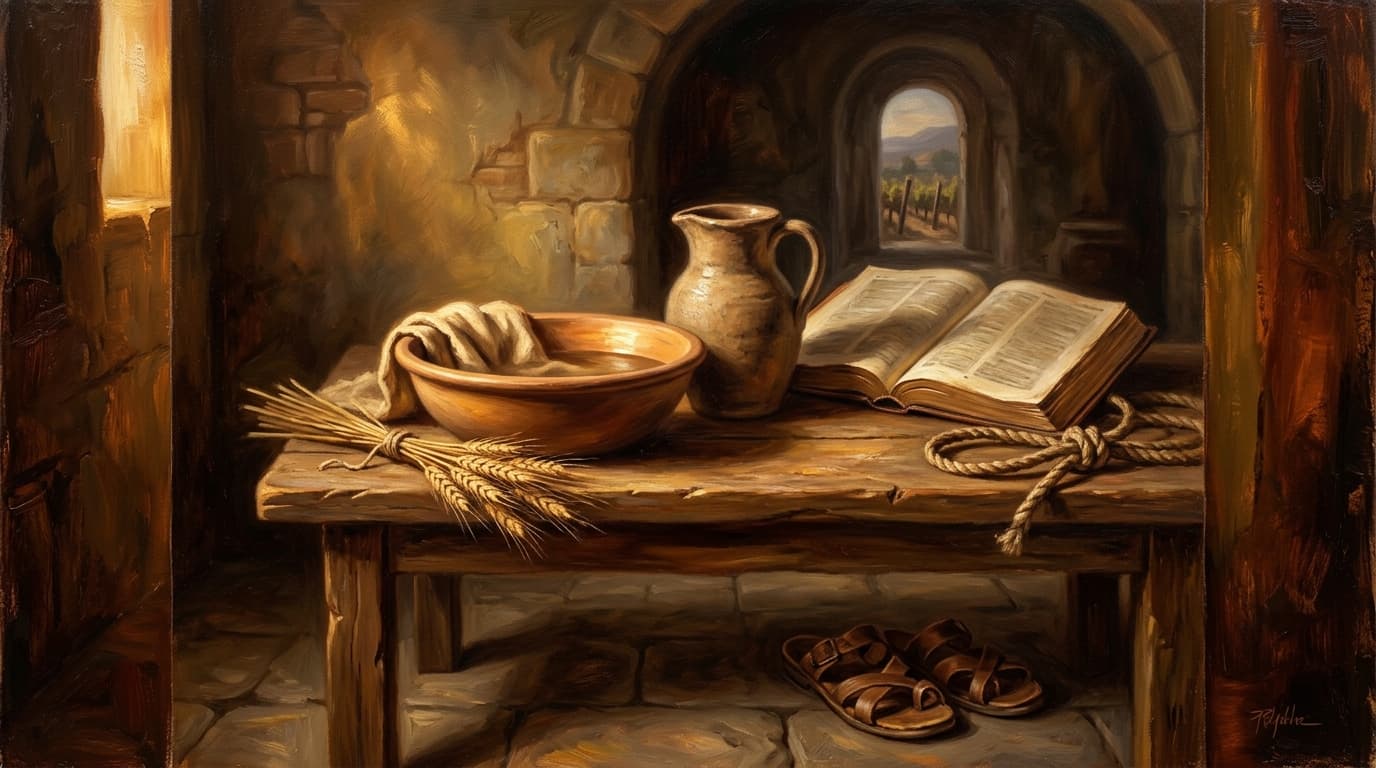
The history of faith in the church
Imagine sitting in the early church, hearing the words of faith that would define millennia.

The history of faith in the church: a journey through time
Imagine sitting in a dimly lit room in the early days of the church. It's not a cathedral or a basilica, but a small, humble house filled with the quiet hum of anticipation. This is where the seeds of faith are being sown, an intangible force that would grow to shape the world. The believers gathered here are the first to hear the gospel, to feel the transformative power of faith in Jesus Christ. This simple beginning is the foundation upon which the vast, intricate tapestry of Christianity is built.
Faith, that mysterious yet fundamental force, is described in as "the substance of things hoped for, the proof of matters not being seen." The early church clung to this definition as they navigated the challenges and persecutions of their time. It was faith that gave them the strength to endure.
Faith and strength: an intertwined legacy
When we speak of "faith," we often imagine a steadfast belief that transcends understanding. It's a concept deeply embedded in the very fabric of Christian doctrine. The Bible is replete with scriptures on strength and faith, illustrating a relationship as old as the church itself. In , the apostles plead, "Increase our faith!" To which Jesus responds that even faith as small as a mustard seed can uproot a sycamine tree.
This relationship between faith and strength becomes especially poignant in times of suffering. Consider the words of , where Timothy is urged to "guard the thing entrusted," avoiding vain arguments that detract from genuine faith. Here, strength is not just physical but moral, a resilience rooted in spiritual conviction.
The evolution of faith through persecution
The early church faced immense challenges, yet it was faith that fortified them through persecution. The apostolic fathers, like Irenaeus, emphasized the importance of maintaining pure, unadulterated faith amidst heretical teachings. In his work Against Heresies, Irenaeus defended the faith against those who sought to corrupt its essence.
The church's history is marked by moments where faith was tested and refined. During the Roman Empire's reign, Christians were often persecuted for their beliefs. Yet, as Justin Martyr noted, these trials only served to strengthen the resolve and faith of believers. They held fast to the teachings of Christ, finding solace in His promise of eternal life.
Faith in the Reformation: a return to roots
Fast forward to the 16th century, where the Reformation sparked a renewed focus on faith. Martin Luther, a pivotal figure in this movement, famously proclaimed that "faith alone" could justify a believer. His translation of the Bible into vernacular languages made scriptures on strength and faith accessible to all, empowering individuals to develop a personal relationship with God.
Luther's emphasis on scripture was a call to return to the foundations of faith found in the New Testament. This era highlighted the transformative power of faith in reforming not just religious practices but also societal norms.
Modern faith: continuity and change
Today, faith remains a cornerstone of Christian life, though its expression has evolved. Theologians like Timothy Keller remind us that true faith is not simply intellectual assent but a dynamic trust in God's promises. He argues that real obedience stems from a heart transformed by faith, not mere adherence to doctrine.
In our current age, we are called to embody the faith of our forebears while navigating modern challenges. This week, consider how you might incorporate this living faith into your daily life. Perhaps begin by reflecting on : "Therefore know that only those who are of faith are sons of Abraham." How does this identity shape your actions and interactions?
Faith's enduring question
As we trace the history of faith in the church, we uncover a narrative of resilience and hope. From the humble beginnings of the early believers to the vast global community today, faith has been the thread that binds us across time and space.
Yet, the question remains: How do we continue to nurture this faith in a world that often challenges its very foundations? Perhaps the answer lies not in finding new paths, but in rediscovering the timeless truths that have always sustained the faithful. As you ponder this, imagine once again sitting in that small, early church gathering. Feel the quiet strength that comes from being amongst those united in faith, ready to walk into history with conviction.
If you find yourself wondering how the relationship between faith and strength plays out in personal struggles, the stories of the early church offer a profound perspective.
In closing, remember that faith is not just a relic of the past but a living, breathing force that calls us to action. As you go about your week, let the history of faith inspire you to seek strength in the unseen and to embrace the eternal hope that binds us all.
Faith in daily life
Faith is not merely a theoretical concept but a dynamic force shaping the everyday experiences of believers. Scripture encourages believers to walk by faith and not by sight, as seen in . This verse underscores the importance of trusting in God's promises even when circumstances are challenging. Augustine of Hippo emphasized that faith is the foundation for understanding, positing that one must believe to truly comprehend the divine (Confessions, Book I).
In practical terms, faith manifests in numerous daily activities. For a parent, it may involve trusting God with the well-being of their children, praying for guidance and protection. For someone facing illness, faith can provide comfort and strength to endure treatment and recovery. An example from contemporary life can be seen in the story of Corrie ten Boom, who, during the harrowing times of World War II, relied on her faith to support and protect others, trusting in God's providence despite immense danger.
Faith also impacts decisions regarding career choices, financial management, and interpersonal relationships. Believers are encouraged to seek God's wisdom, as noted in , which promises that God gives wisdom generously to those who ask. Thus, faith is not confined to the church pew; it extends into all facets of life, guiding believers in their decisions and providing peace in uncertainty.
The role of faith in community building
Faith is a powerful tool in fostering strong, supportive communities. The early church, as depicted in , exemplifies a community united by shared beliefs and mutual care. This passage illustrates how faith can lead to communal living, where believers share resources and support one another, creating an environment of love and generosity.
Theologian Dietrich Bonhoeffer, in his work "Life Together," highlights the importance of Christian community as a place where individuals can experience God's presence through fellowship. Bonhoeffer argues that community is essential for spiritual growth, providing accountability, encouragement, and a sense of belonging.
Contemporary faith communities often organize activities such as service projects, prayer groups, and social gatherings that strengthen bonds among members. An example is the Habitat for Humanity initiative, where faith communities join forces to build homes for those in need, demonstrating faith in action. Such activities not only meet physical needs but also reflect the love and compassion central to the Christian faith.
Moreover, faith communities can offer support in times of crisis, such as natural disasters or personal loss, providing both practical assistance and spiritual solace. This solidarity reinforces the idea that faith is not just an individual journey but a collective experience that thrives in community settings.
Faith and moral decision making
Faith significantly influences moral and ethical decision-making, guiding believers in discerning right from wrong. The Bible is a moral compass, with passages like providing clear directives on how to act justly, love mercy, and walk humbly with God. These principles form the bedrock of Christian ethics, influencing decisions on issues such as honesty, integrity, and justice.
Thomas Aquinas, in his "Summa Theologica," elaborated on the role of faith in moral reasoning, asserting that faith enlightens the intellect and strengthens the will, enabling believers to make choices aligned with God's will. Aquinas emphasized that faith and reason are complementary, working together to guide ethical behavior.
In contemporary society, moral dilemmas abound, from business practices to medical ethics. Faith can provide clarity and conviction in navigating these challenges. For instance, a business leader driven by faith might prioritize ethical practices over profit maximization, reflecting values such as fairness and stewardship. Similarly, in healthcare, faith-based considerations might influence decisions about end-of-life care, prioritizing compassion and dignity.
Faith also encourages believers to advocate for social justice, addressing systemic inequalities and championing the rights of the marginalized. This is evident in the work of individuals like Martin Luther King Jr., whose faith-driven commitment to justice and equality inspired transformative social change.
Faith's influence on personal identity
Faith plays a pivotal role in shaping personal identity, providing a foundation for self-understanding and purpose. According to , believers are encouraged to see their identity as intertwined with Christ, living by faith in the Son of God who loves them. This transformative aspect of faith impacts how individuals perceive themselves and their place in the world.
John Calvin, in his "Institutes of the Christian Religion," argues that knowledge of God and knowledge of self are intimately connected, with faith serving as the lens through which believers understand their true identity. Calvin posits that through faith, individuals realize they are created in the image of God, endowed with inherent dignity and purpose.
Personal identity informed by faith often leads to a strong sense of mission and calling. Whether it is a calling to a particular profession, ministry, or service, faith provides the conviction and motivation to pursue one's purpose with passion and dedication. For example, someone with a deep faith might feel called to a career in social work, driven by the desire to serve and uplift others.
Faith also shapes values and priorities, influencing lifestyle choices and relationships. A person whose identity is rooted in faith may prioritize spiritual growth, community involvement, and service to others, reflecting the values of love, humility, and generosity. This faith-informed identity offers a stable anchor in the midst of life's uncertainties, guiding believers in their journey of self-discovery and fulfillment.
Faith and the experience of suffering
The presence of suffering and hardship is an unavoidable aspect of human existence, and faith offers a framework for understanding and enduring such experiences. The Bible acknowledges the reality of suffering, as seen in , where Paul speaks of the present sufferings as not worth comparing with the glory that will be revealed. This perspective encourages believers to view suffering through the lens of hope and eternal purpose.
C.S. Lewis, in his work "The Problem of Pain," explores the relationship between faith and suffering, suggesting that pain can be a tool for spiritual growth and a reminder of the fallen state of the world. Lewis posits that through suffering, individuals are often brought closer to God, finding solace and strength in their faith.
In practical terms, faith provides comfort and resilience in the face of adversity. It encourages believers to trust in God's sovereignty and goodness, even when circumstances seem bleak. This trust is exemplified in the story of Job, who, despite immense suffering, remained steadfast in his faith, ultimately experiencing restoration and deeper understanding of God's character.
Faith communities also play a crucial role in supporting individuals through suffering, offering prayer, companionship, and practical assistance. This communal support underscores the belief that suffering is not to be borne in isolation but shared within the body of Christ, fostering an environment of empathy and encouragement.
Faith thus transforms the experience of suffering, providing meaning and hope that transcends present difficulties and points to a future promise of restoration and peace.