Bible verses about patience: understanding the virtue
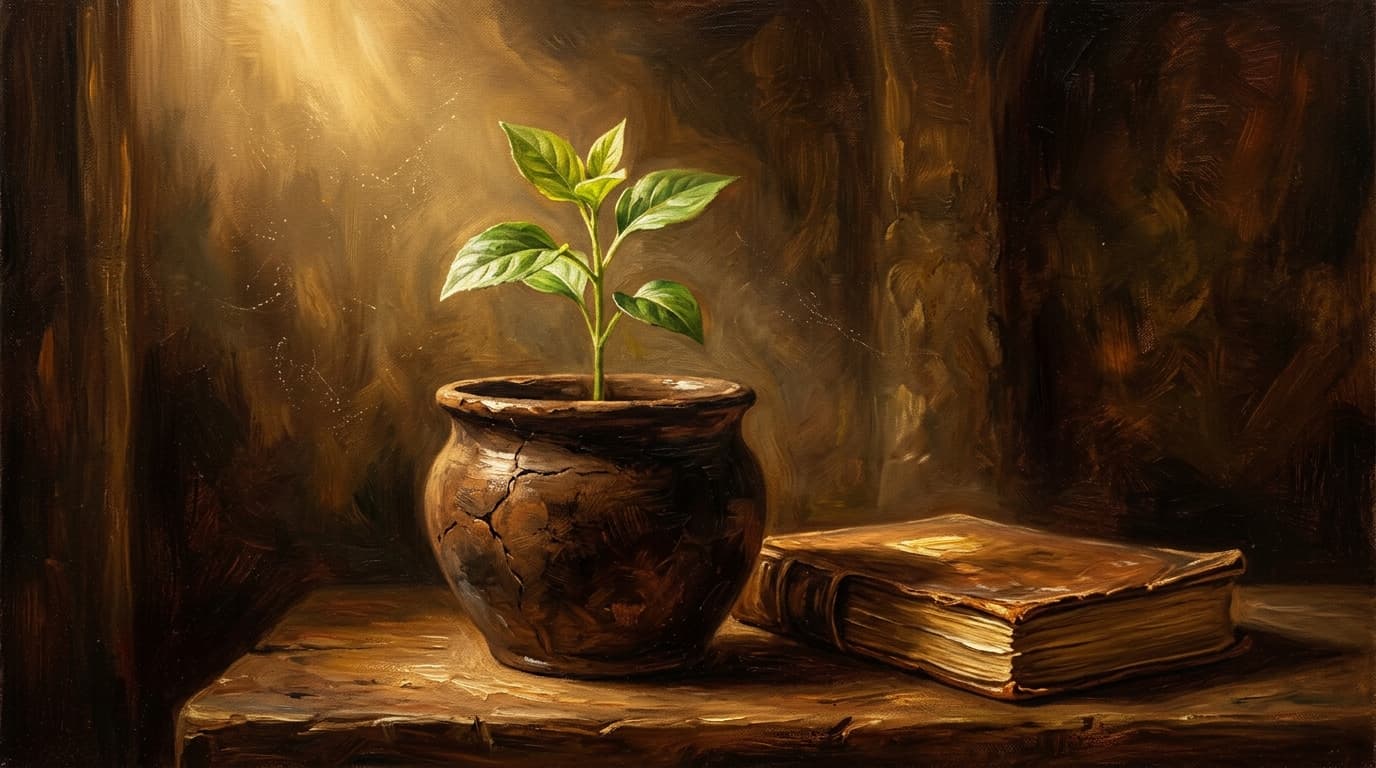
Suppose patience was a seed planted deep within the soul's soil, needing time and care to flourish. This essay explores biblical patience, where waiting becomes profound growth.
The slow art of patience
Suppose patience were a seed planted deep within the soil of the soul, needing time and care to flourish. As we dig into the Bible, we find patience portrayed not merely as endurance but as an art of waiting that leads to profound growth. Take a moment to consider the farmer. He sows his seed and waits for the rain to nurture it. There's a lesson here: waiting is not just empty time but a space for transformation.
What does the Bible say about patience?
In the Bible, patience is not about passive waiting but active perseverance. Consider . "Be patient, then, brothers, until the coming of the Lord," James writes, comparing our waiting to that of a farmer awaiting his harvest. The farmer's patience is deliberate and expectant, a preparation for the fruit to come.
Similarly, the Parable of the Persistent Widow in illustrates the power of perseverance. The widow's relentless pursuit of justice is rewarded not because of the judge's character but due to her unwavering patience. Here, patience is depicted as a force that moves even the most unjust systems towards righteousness.
Waiting on God: More than just time
The idea of waiting on God is woven throughout scripture, transforming the concept of patience into a spiritual discipline. urges believers to "be diligent, spotless and unblameable," counting the Lord's patience as salvation. Patience here is not idle but is an active engagement in God's work.
The Hebrew word for patience often translates to "long-suffering," a term that captures the essence of endurance amidst trials. In , Paul encourages Timothy to "suffer evil as a good soldier of Jesus Christ." Patience is equated with strength, a vital quality for those who serve.
A virtue nobody wants to learn?
Why, then, is patience such an unpopular virtue? Perhaps it's the waiting itself that deters us. In a world that prizes immediacy, waiting feels like forfeiting control. Yet, Tertullian of Carthage in his Apology suggests that patience is at the core of Christian virtue. "One can obey no precept, fulfill no work well-pleasing to the Lord, if estranged from it," he argues.
Patience is a form of trust, a surrender to God's timing over our own. As John Wesley puts it, patience is not a mere "natural indolence" but a "gracious temper, wrought in the heart of a believer, by the power of the Holy Ghost."
Practical patience: Living the wait
How can we cultivate patience in daily life? Consider the mundane act of gardening. The gardener knows the value of each waiting season: the planting, watering, and nurturing, all act as a metaphor for a life lived patiently. Proverbs reminds us, "Whoever is tilling the ground is satisfied with bread" ().
Prayer, too, becomes a practice of patience. In waiting, we learn to listen, to align our desires with divine timing. As C.S. Lewis noted, "I am sure that God keeps no one waiting unless He sees that it is good for him to wait."
Patience and perfection
According to , patience is part of advancing toward perfection, not laying again a foundation of conversion from dead works. It's about moving forward, even when progress is slow.
"For the earth, having drunk in the rain coming on it many times, and is bringing forth herbs fit for those because of whom it is also dressed, partakes of blessing from God," the passage notes.
Patience perfects our faith, shaping us into the likeness of Christ, as Augustine of Hippo described, "By this patience, we bear, even while we be sound in body, that in the midst of the offenses of this world our blessedness is deferred."
The end of waiting
As we return to our initial image of the seed, consider how waiting transforms it into a flourishing plant. In God's time, patience yields the peaceable fruit of righteousness. "And let us not be weary in well doing," Paul writes, "for in due season we shall reap, if we faint not" ().
Patience, then, is not merely a pause but a profound part of God's process. Waiting on God is never wasting time but is the art of becoming more fully who we are meant to be.
If you're curious about what it means to wait on God, you might find deeper insight than expected. Or perhaps you're wondering how patience and faith work together. The journey is worth the wait.
The role of patience in spiritual growth
Patience is often viewed as a passive quality, yet in the Christian life, it is an active and essential component of spiritual growth. The Apostle Paul identifies patience as a fruit of the Spirit in , emphasizing its importance alongside love, joy, and peace. Patience allows believers to cultivate a deeper relationship with God, as it requires trusting in His timing and wisdom. Theologian John Calvin argued that patience is necessary for enduring trials and developing perseverance in faith. He noted that "the Lord trains His followers through patience, for without it, faith is incomplete."
also, patience equips believers to reflect on their spiritual journey, recognizing God's hand in their lives even amidst struggles. underscores this by stating that the testing of faith produces perseverance, which leads to maturity. This patience is not merely waiting passively; it involves actively engaging with God's promises and holding onto hope. Believers are called to patience in prayer, as seen in , where Paul urges Christians to be "joyful in hope, patient in affliction, faithful in prayer." The cultivation of patience transforms the believer's character, enabling them to reflect Christ more fully.
Biblical examples of patience
The Bible is replete with stories of individuals who exemplified patience in their lives. One of the most prominent examples is Job, whose story is detailed in the book named after him. Job's patience in the face of immense suffering and loss is a testament to his unwavering faith. Despite losing his wealth, health, and family, he refused to curse God and remained steadfast in his trust, as highlighted in . The endurance of Job is often cited as a model for believers facing trials, illustrating that patience is intertwined with faith and hope.
Another biblical figure who demonstrated patience is Abraham. God promised Abraham that he would be the father of a great nation, but this promise was fulfilled only after many years. reflects on Abraham's patience, stating, "And so after waiting patiently, Abraham received what was promised." His life exemplifies the virtue of waiting on God's timing and the blessings that follow such faithfulness. Similarly, Joseph's story in Genesis is one of patience and perseverance. Sold into slavery by his brothers, Joseph endured years of hardship before rising to a position of power in Egypt. His patience and trust in God's plan ultimately led to the salvation of his family, as seen in .
Patience in modern Christian life
In contemporary society, where instant gratification is often sought, cultivating patience can be challenging. The fast-paced nature of modern life contrasts sharply with the biblical call to wait on the Lord, as seen in : "Wait for the Lord; be strong and take heart and wait for the Lord." This verse encourages believers to find strength and courage in waiting, trusting that God's timing is perfect. Theologian Dietrich Bonhoeffer highlighted the importance of patience, particularly in the context of community life, noting that "patience is the companion of wisdom."
In practical terms, patience can manifest in various aspects of daily life, such as waiting for career opportunities, healing in relationships, or personal growth. It also plays a crucial role in fostering resilience and preventing burnout. Recognizing that God's plans may differ from our own can bring peace and contentment. For example, a Christian entrepreneur may experience setbacks in business endeavors but remains patient, trusting that God has a greater purpose in mind.
Patience also affects interpersonal relationships within the church and family. It fosters an environment where individuals can grow and thrive, knowing they are given the grace to make mistakes and learn from them. By practicing patience, Christians can better emulate Christ's love and compassion, creating a community that reflects God's kingdom on earth.
The challenges of practicing patience
Despite its significance, practicing patience is fraught with challenges. The human inclination towards impatience often stems from a desire for control and certainty. This struggle is evident in the story of Saul, who, in his impatience, offered a burnt sacrifice against God's command, leading to his downfall as king (). Saul's story is a cautionary tale about the consequences of impatience and the importance of waiting for God's instruction.
Theologian C.S. Lewis noted the difficulty of patience in a world filled with distractions and temptations. In his book "Mere Christianity," Lewis describes patience as "one of the most painful virtues to practice" because it requires surrendering one's desires and trusting in God's plan. This surrendering is often hindered by fear and anxiety, which can lead to a lack of faith and reliance on one's understanding instead of God's wisdom ().
To combat these challenges, believers are encouraged to engage in spiritual disciplines such as prayer, meditation, and the study of Scripture. By immersing themselves in God's Word, they can find strength and encouragement to remain patient. The community of believers also plays a vital role in supporting one another in this endeavor, providing accountability and encouragement to persevere in the face of impatience.
Patience as an expression of love
In the Christian faith, patience is closely linked to love. The Apostle Paul, in his famous passage on love in , begins by stating that "Love is patient, love is kind." This connection indicates that patience is a fundamental aspect of expressing genuine love for others. Patience allows individuals to bear with one another's weaknesses and failings, fostering an environment of grace and forgiveness.
Theologian Thomas Aquinas described patience as a virtue that safeguards the mind against sorrow, enabling believers to act out of love even when faced with adversity. This perspective underscores that patience is not passive endurance but an active choice to love despite challenges. The parable of the Prodigal Son () exemplifies this love-infused patience. The father's patient waiting and eventual joyous reception of his repentant son reflect God's patient love for humanity.
Practicing patience in love can transform relationships and communities. It encourages believers to listen actively, forgive readily, and serve selflessly, reflecting Christ's love. In a world where conflicts and misunderstandings abound, patience as an expression of love is a powerful testimony of faith and a means of drawing others to Christ.