Christian theology explained: core beliefs through history
Imagine a faith that has journeyed through 2000 years, shaped by countless thinkers yet united in core beliefs. This is the story of Christianity.
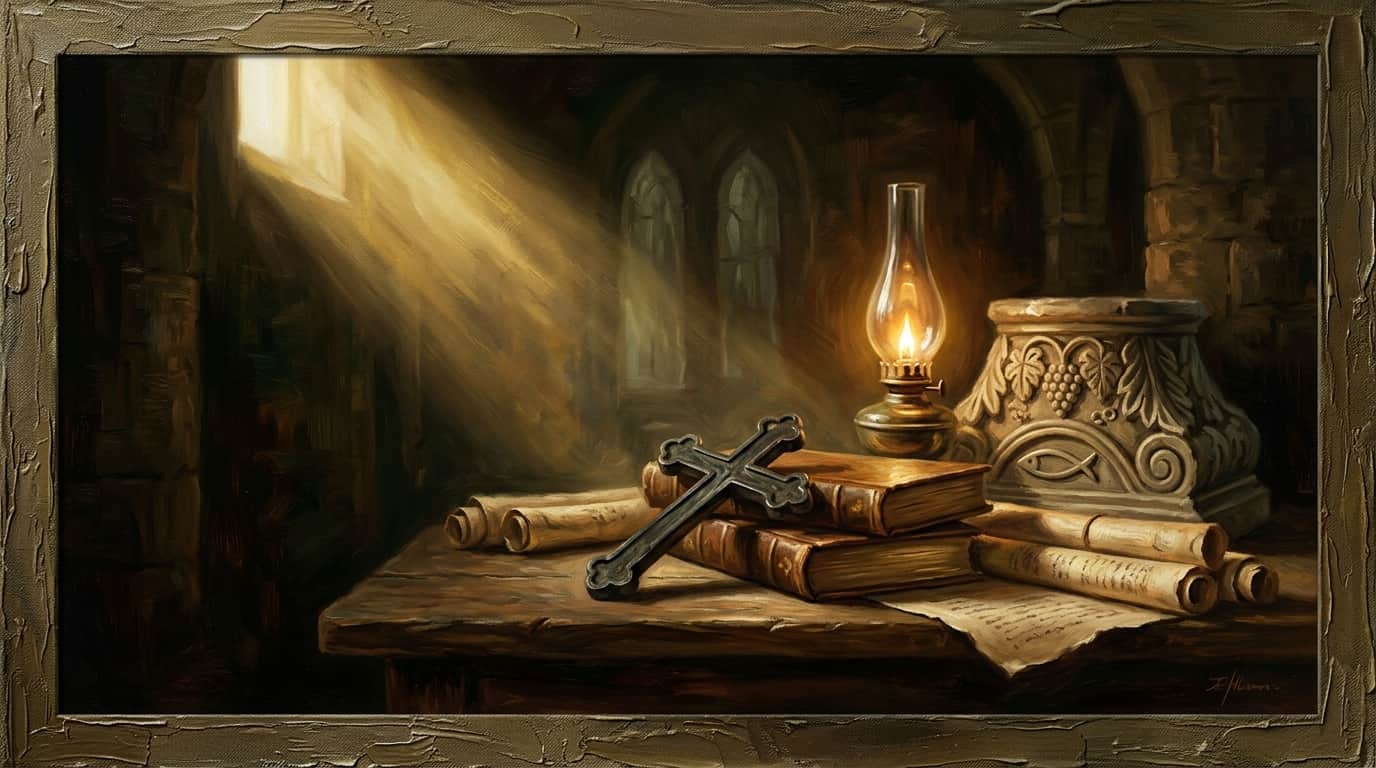
Imagine, for a moment, a vast library with books stretching back millennia. Each tome is a chapter in the unfolding story of Christianity, its struggles, triumphs, and the evolving understanding of what it means to follow Christ. This is the essence of "Christian theology explained." It is a narrative of faith, reason, and divine revelation that has been molded by historical events and great minds across 2000 years.
The quest for understanding: The early church fathers
When we speak of "Christian theology explained," we begin with the early church fathers. These were thinkers like Augustine of Hippo and Athanasius of Alexandria, who wrestled with defining orthodoxy. Suppose you were Augustine, living in a world where Christianity was still solidifying its identity amidst competing philosophies. How would you articulate the faith?
Augustine's Confessions offers a glimpse into the heart of a man converted from paganism to Christianity. His journey was not merely intellectual but deeply personal, a tapestry woven with questions about God's nature and human purpose. His writings laid the groundwork for doctrines like original sin and grace that remain central.
In contrast, Athanasius was embroiled in the Christological debates that defined the Nicene Creed. He defended the divinity of Christ against Arianism, which viewed Jesus as a created being rather than co-eternal with the Father. Athanasius's persistence helped establish the doctrine of the Trinity, a cornerstone of Christian belief.
The development of doctrine: Councils and creeds
The early ecumenical councils were pivotal in shaping Christian doctrine. Imagine a gathering where bishops from across the Christian world met to hammer out the details of faith. The Council of Nicaea in 325 A.D. addressed the Arian controversy, affirming the full divinity of Christ. They declared Him "of one substance with the Father," a phrase that echoes through every recitation of the Nicene Creed.
The Council of Chalcedon in 451 A.D. further developed Christological doctrine by articulating the dual nature of Christ as fully God and fully man. This definition sought to unify the church but also led to schisms. Suppose the council had not reached consensus; how different might Christianity look today?
A medieval synthesis: Scholasticism and the role of reason
Fast forward to the Middle Ages, where theologians like Thomas Aquinas sought to reconcile faith with reason. Aquinas's Summa Theologica embarked on a grand synthesis of Christian doctrine and Aristotelian philosophy. He argued that reason and revelation were harmonious, that human rationality could lead one to truths about God.
Aquinas's method was rigorous. He would present objections to a doctrine, concede valid points, and then respond with careful reasoning. For instance, one might object that faith is irrational because it accepts truths beyond human understanding. But consider Aquinas's reply: faith completes and elevates reason, enabling us to grasp divine mysteries that reason alone cannot.
The medieval period also saw the rise of mystics like Julian of Norwich, who emphasized personal experience of God's love. Her visions and writings provided a counterbalance to scholasticism, reminding believers of the intimate and personal nature of faith.
Reformation and counter-reformation: A call to return
The Reformation in the 16th century marked a seismic shift. Figures like Martin Luther and John Calvin challenged the Catholic Church's teachings, emphasizing "sola scriptura" (Scripture alone) and "sola fide" (faith alone) as the basis for salvation. Luther's translation of the Bible into German democratized access to Scripture, allowing individuals to engage directly with the text.
Suppose you were living in Wittenberg as Luther posted his 95 Theses. The air would have been charged with ideas and debates, a community grappling with profound questions about authority and grace. Luther's insistence on justification by faith alone became a rallying cry for reformers.
In response, the Catholic Church initiated the Counter-Reformation, clarifying its doctrines through the Council of Trent. It reaffirmed traditional teachings while addressing abuses that had sparked Protestant critique. This period was not merely doctrinal but deeply pastoral, as both sides sought to shepherd their flocks through turbulent times.
Modern challenges and theological diversity
Today, Christian theology faces new challenges and opportunities. The rise of secularism and pluralism invites questions about Christianity's place in a multicultural world. How does one articulate the faith in a way that resonates with contemporary society?
Theologians like N.T. Wright emphasize the historical context of Scripture, urging a return to the Jewish roots of Jesus's teachings. Meanwhile, liberation theology focuses on the social and political implications of the Gospel, advocating for the poor and marginalized.
In this diverse landscape, Christian theology continues to evolve. It is both grounded in tradition and responsive to the present, a living conversation that invites believers to explore and deepen their understanding.
The doctrine of the Trinity
The doctrine of the Trinity is a cornerstone of Christian theology, asserting that God exists as three persons in one essence: Father, Son, and Holy Spirit. This concept, though not explicitly named in Scripture, is supported by various biblical passages that convey the triune nature of God. For instance, the Great Commission in commands believers to baptize "in the name of the Father, and of the Son, and of the Holy Spirit," reflecting a triune understanding of God. Theologian Augustine of Hippo famously explored the Trinity in his work "De Trinitate," arguing that the triune nature of God reflects perfect unity and love, where each person of the Trinity is distinct yet coequal and coeternal.
The Trinity also plays a critical role in understanding the nature of divine relationships. The Father, the source of all, generates the Son, who is begotten, and the Holy Spirit proceeds from both the Father and the Son, as articulated in the Nicene Creed. This relational dynamic within the Godhead is mirrored in the Christian call to community and love, as believers are encouraged to reflect the unity and diversity of the Trinity in their relationships with one another.
A practical example of the Trinity's impact can be seen in liturgical practices. Many Christian traditions begin services with a Trinitarian invocation, acknowledging the presence and work of the triune God in worship. This doctrine, though complex and often challenging to comprehend fully, remains a profound mystery that invites believers into deeper reflection on the nature of God and the divine community.
The atonement: The work of Christ
The doctrine of atonement addresses how Jesus Christ's life, death, and resurrection reconcile humanity with God. Central to this doctrine is the belief that Christ's sacrifice on the cross was necessary for the forgiveness of sins and the restoration of the broken relationship between humanity and the divine. In , it is written, "For Christ also suffered once for sins, the righteous for the unrighteous, to bring you to God." This passage captures the essence of substitutionary atonement, where Christ, the sinless one, takes upon himself the punishment deserved by sinners.
Various theories of atonement have emerged throughout Christian history. Anselm of Canterbury, in his work "Cur Deus Homo," proposed the satisfaction theory, which emphasizes Christ's death as a means of satisfying the justice of God. In contrast, the Christus Victor model, championed by Gustav Aulén, views the atonement as Christ's victory over the powers of sin and death, liberating humanity from bondage.
A contemporary example of atonement theology in practice can be found in the sacrament of Communion, where Christians commemorate the sacrifice of Christ through the symbolic elements of bread and wine. This ritual is a tangible reminder of the atoning work of Jesus and the grace extended to believers. The doctrine of atonement, therefore, is not merely a theological concept but a lived experience that shapes Christian identity and practice.
The resurrection: Hope and new life
The resurrection of Jesus Christ stands at the heart of Christian belief, signifying victory over death and the promise of eternal life. This event, documented in all four Gospels, is a testament to the power of God and the fulfillment of divine promises. In , the apostle Paul writes, "But Christ has indeed been raised from the dead, the firstfruits of those who have fallen asleep. For since death came through a man, the resurrection of the dead comes also through a man." This passage underscores the hope that Christ's resurrection brings to believers, assuring them of their future resurrection.
Theologians like N.T. Wright have explored the implications of the resurrection for Christian theology and practice. Wright argues that the resurrection is not merely a historical event but a transformative reality that inaugurates the new creation. It challenges believers to live in the light of this new reality, embodying the values of God's kingdom here and now.
In practical terms, the resurrection impacts Christian worship and discipleship. Easter, the celebration of Christ's resurrection, is the pinnacle of the Christian liturgical year, marked by joyous worship and a reaffirmation of faith. The resurrection also inspires acts of service and compassion, as believers are called to participate in God's redemptive work in the world, embodying the hope and new life that the resurrection promises.
The Holy Spirit: Presence and power
The doctrine of the Holy Spirit emphasizes the active presence and power of God in the world and in the lives of believers. The Holy Spirit is described in Scripture as the Comforter, Advocate, and Spirit of truth, who guides, empowers, and sanctifies the Church. In , Jesus promises, "But the Advocate, the Holy Spirit, whom the Father will send in my name, will teach you all things and will remind you of everything I have said to you." This highlights the Spirit's role in continuing the work of Christ by teaching and reminding believers of divine truths.
Theologians such as Karl Barth have emphasized the importance of the Holy Spirit in revealing God's word and will to humanity. Barth contended that the Spirit makes the revelation of God in Christ real and effective in the lives of believers, enabling them to respond to God's call with faith and obedience.
The influence of the Holy Spirit is evident in various aspects of Christian life and practice. In worship, the Spirit is invoked to inspire and empower, moving believers to genuine expressions of faith and adoration. In personal and communal prayer, the Spirit intercedes and guides, cultivating a deeper relationship with God. also, the gifts and fruits of the Spirit, as outlined in , manifest in the lives of believers, equipping them for service and mission. Through the Spirit, Christians experience the dynamic and sustaining presence of God, drawing them into a life of holiness and witness.
The church: Community and mission
The doctrine of the Church, or ecclesiology, explores the nature and purpose of the Christian community. The Church is described in the New Testament as the body of Christ, a living organism through which God's presence and mission are expressed in the world. In , Paul writes about the various roles within the Church, highlighting the diversity of gifts given for the building up of the body and the fulfillment of its mission.
Theologians like Dietrich Bonhoeffer have emphasized the communal aspect of the Church, arguing that it exists as a visible expression of God's kingdom on earth. Bonhoeffer's concept of "life together" underscores the importance of Christian fellowship, mutual support, and accountability in the pursuit of holiness and mission.
In practice, the Church is a worshiping community, gathering to praise God, receive the sacraments, and hear the proclamation of God's word. It also acts as a missional community, called to bear witness to the gospel through acts of justice, mercy, and love. This dual focus on worship and mission reflects the Church's identity as both a gathered and sent people, empowered by the Spirit to engage the world with the transformative message of Christ. Through its communal life and mission, the Church embodies the hope and reconciliation offered in the gospel, inviting others to join in the journey of faith.
The enduring mystery of faith
In the end, "Christian theology explained" is not about having all the answers but embracing the mystery of faith. As Gregory of Nazianzus once preached, it is a journey from the milk of simple truths to the meat of profound doctrines. Yet, the essence remains: a God who entered history, whose love compels us to seek, question, and ultimately, to believe.
Returning to our library, each book, a testament to the enduring quest for truth, reminds us that Christian theology is a vast and complex field. But at its heart, it is about a relationship with the divine, a story that spans centuries yet speaks to each of us personally today.
If you are curious about what the early church fathers believed or how modern theologians interpret Scripture, these questions open doors to deeper exploration. The journey of theology is ongoing, a conversation across ages and cultures, inviting each of us to participate.