What Is Ascension Day? Meaning, History, and Significance
A guide to Ascension Day, explaining Jesus' ascension in Acts 1 and Luke 24, its history, and why Christ's enthronement matters for Christian hope.
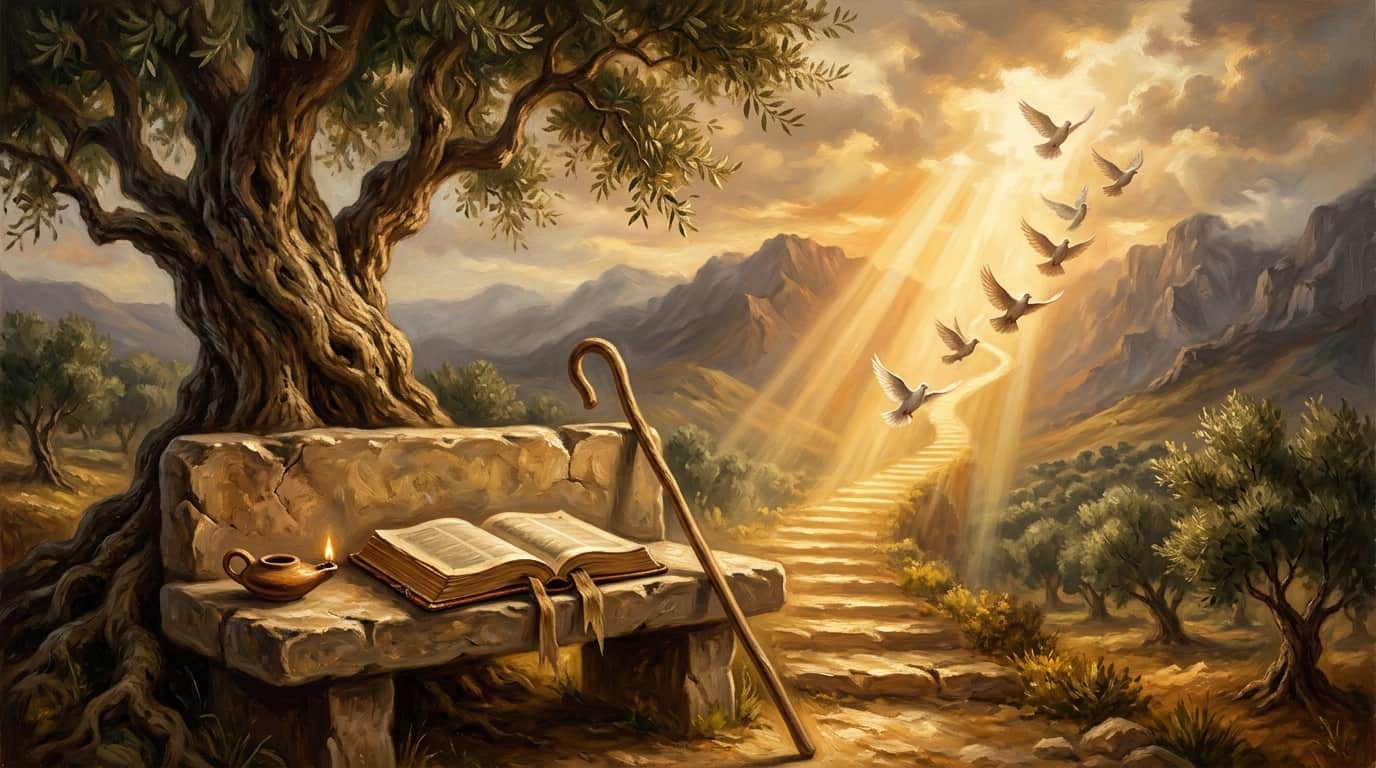
When the disciples stood gazing up into the sky, watching Jesus ascend, they might have felt a mix of emotions, wonder, confusion, perhaps even a tinge of abandonment. But the Ascension, recorded in , is far more than just a farewell scene in the divine drama. It is a critical turning point, one often overshadowed by the more celebrated events of the Resurrection and Pentecost.
The Ascension Day meaning
What, then, is Ascension Day? This event, occurring forty days after Easter, marks the moment when Jesus was taken up into heaven. According to , Jesus blessed His disciples and was carried into the heavens as they worshiped Him. Here, in a few short verses, lies a profound mystery: Why did Jesus need to ascend? And what does this mean for believers today?
The church fathers, including Gregory of Nazianzus, spoke of the Ascension as not merely a departure but a completion. It is the moment when Jesus, having conquered death, returns to the Father. But this return is not a retreat. Instead, it is a crucial step in the unfolding of the divine plan, preparing the way for the Holy Spirit's arrival at Pentecost.
Jesus ascension: A necessary departure
One might object that the Ascension seems like a divine retreat, a withdrawal of God from the world. But consider: the Ascension is less about Jesus leaving and more about His transformation in role. In , Jesus tells His disciples that it is to their advantage that He goes away because only then can the Advocate, the Holy Spirit, come. In this light, the Ascension is a necessary prelude to the empowerment of the Church.
Theologians such as John Calvin have emphasized that Jesus' Ascension signifies His enthronement. He now sits "at the right hand of the Father" (), a position of authority and intercession. Calvin viewed this as a vital truth: Christ's physical absence allows His spiritual presence to permeate the world more fully through the Spirit.
Ascension of Christ: Scriptural insights
The Ascension is recorded in several passages, each offering a unique perspective. In , the disciples ask if Jesus will restore the kingdom to Israel. His reply redirects their focus from earthly concerns to a spiritual mission: "You will receive power when the Holy Spirit comes on you; and you will be my witnesses." The Ascension, then, transforms the disciples' expectations, shifting from a political Messiah to a spiritual Savior.
In , Paul describes the Ascension as a triumph, quoting : "When he ascended on high, he took many captives." This victory imagery portrays Jesus as a conquering king, subduing the spiritual forces of evil. The Ascension, therefore, is not just a leaving; it is a declaration of Christ's lordship over all creation.
Why the Ascension matters
So, why does Ascension Day matter? First, the Ascension completes the story of the Incarnation. Jesus came, lived, died, resurrected, and ascended. Each part is essential. As N.T. Wright notes, the Ascension is the culmination of the resurrection narrative: "Without the Ascension, the resurrection would be a strange, isolated event, leaving Jesus in a state of limbo rather than glorification."
Moreover, the Ascension assures believers of Jesus' ongoing work. According to , He "always lives to intercede for them." His Ascension signifies His role as our high priest, continually advocating for us before the Father. This ongoing intercession is a source of comfort and assurance for believers, affirming that we are never alone.
Common misunderstandings about the Ascension
Despite its significance, the Ascension is often misunderstood or overlooked. Some might view it as a mere epilogue to the Gospel narratives, an afterthought. But the Ascension is foundational to Christian doctrine. Without it, the Gospel story remains incomplete.
Another misconception is that the Ascension implies Jesus' absence. On the contrary, His departure initiates a closer intimacy through the Holy Spirit, who "will be in you" (). This spiritual indwelling is a profound mystery, one that transforms the Church into the body of Christ on earth.
Theological reflections on the Ascension
Reflecting on the Ascension invites us to consider our own role as the body of Christ. If Jesus is the "head of the Church," as Paul writes in , then the Church is His hands and feet in the world today. The Ascension commissions us to carry out His work, empowered by the Spirit.
Historically, figures like Athanasius of Alexandria have emphasized the Ascension's role in bridging heaven and earth. He saw in the Ascension not merely a departure but the beginning of a new era for humanity, where the divine and human are united in Christ.
The Ascension and its relation to the Kingdom of God
The Ascension of Jesus is a critical event that underscores the establishment of the Kingdom of God. When Jesus ascended into heaven, it was not merely a physical departure from earth; it signified His enthronement as King. This is explicitly mentioned in , where the disciples witness Jesus being taken up and are told by two men in white that He will return in the same manner. The Ascension affirms the fulfillment of Old Testament prophecies concerning the Messiah's reign, such as in , where the Son of Man is given dominion and glory.
Theologian N.T. Wright argues that the Ascension is essentially the enthronement of Jesus, where He takes His rightful place at the right hand of the Father, a position of authority and power. This signifies the beginning of the Kingdom of God on earth, as Jesus now rules over all creation. The Ascension also implies that Christ's kingdom is both "already" and "not yet." While He reigns from heaven, the full realization of His kingdom will come with His return.
The Ascension not only marks the kingship of Jesus but also empowers His followers to continue His mission. This is reflected in the Great Commission, where Jesus charges His disciples to spread the gospel to all nations (). They are assured of His presence and authority, even as He ascends, indicating that His reign is active and dynamic, impacting the world through the work of the Church.
Ascension in early Christian liturgy and art
The Ascension has been a significant focus in early Christian liturgy and art, serving as a testament to its importance in the life of the Church. In the early centuries of Christianity, the Ascension was celebrated with various liturgical practices that emphasized its theological significance. The feast was often marked by a vigil, followed by a Eucharistic celebration, highlighting the joy and hope that the Ascension brings to believers.
Artistic representations of the Ascension from the early Christian period reveal insights into how this event was understood and revered. In the catacombs of Rome, for instance, frescoes depict Jesus being lifted into the heavens, surrounded by angels and apostles. Such artworks not only illustrate the event itself but also communicate theological truths, such as Christ's divinity and His role as the mediator between heaven and earth.
Theologian Jaroslav Pelikan notes that the visual and liturgical expressions of the Ascension in early Christianity were not merely decorative or ceremonial. They served as catechetical tools, teaching the faithful about the mysteries of the faith and reinforcing the hope of Christ's return. The Ascension was thus both a theological and communal event, shaping the identity and mission of the early Church.
The Ascension and its implications for ecclesiology
The Ascension has profound implications for ecclesiology, the study of the Church. As Jesus ascends, He commissions the Church to be His body on earth, empowered by the Holy Spirit. This transition is crucial, as it marks the beginning of the Church's mission in the world. With Christ seated at the right hand of the Father, the Church is tasked with representing His presence and authority on earth.
In , Paul emphasizes that Christ's Ascension leads to the giving of spiritual gifts to the Church, enabling it to fulfill its mission. The Ascension is thus integral to the Church's identity as a community called to embody the life and teachings of Jesus. The Church is not merely a gathering of believers but a living organism that manifests Christ's kingdom through word and deed.
Theologian Karl Barth underscores the Ascension's ecclesiological significance by highlighting the Church's role as a witness to the world. As a community formed by the Ascension, the Church is called to live out the implications of Christ's reign, demonstrating His love, justice, and mercy. The Ascension challenges the Church to transcend its earthly limitations and participate in the divine mission of restoration and reconciliation.
Ascension and eschatological hope
The Ascension is deeply connected to Christian eschatological hope, the belief in the ultimate fulfillment of God's promises. As Jesus ascends, He assures His followers of His eventual return, instilling hope for the consummation of God's kingdom. This hope is rooted in the promise of His second coming, as articulated in , where Jesus speaks of preparing a place for His disciples and returning to take them to Himself.
The Ascension is a reminder that the current world is not the final reality. Theologian Jürgen Moltmann emphasizes that the Ascension points believers towards the future, fostering a hope that transcends present circumstances. It instills confidence that, despite the brokenness and suffering in the world, God's purposes will ultimately prevail.
This eschatological hope is not passive but active, motivating believers to live in anticipation of Christ's return. The Ascension calls Christians to engage in acts of love, justice, and peacemaking, reflecting the values of the upcoming kingdom. It encourages the Church to be a prophetic community that bears witness to the hope of a new creation, where God's peace and righteousness reign.
Ascension and the role of the Holy Spirit
The Ascension sets the stage for the coming of the Holy Spirit, a crucial aspect of Christian theology. Jesus Himself promises that His departure is necessary for the Spirit to come, as seen in . The Ascension and Pentecost are thus closely linked, with the former paving the way for the latter.
The Holy Spirit's arrival signifies the continuation of Christ's work through the Church. Empowered by the Spirit, believers are equipped to carry out the mission of spreading the gospel and making disciples. The Ascension highlights the transition from Jesus' physical presence to His spiritual presence through the Spirit, who guides, empowers, and comforts the Church.
Theologian Augustine of Hippo highlights the transformative role of the Holy Spirit in the life of believers. The Spirit not only enables individuals to live according to God's will but also unites them as one body in Christ. The Ascension ensures that the Church is not left alone but is continually supported by the Spirit's presence and power.
The Ascension, therefore, is not an end but a beginning, marking the inauguration of a new era where the Holy Spirit empowers the Church to fulfill its divine mandate. It challenges Christians to be open to the Spirit's leading and to participate actively in God's redemptive mission in the world.
A call to rediscover Ascension Day
In our modern, fast-paced world, the feast of the Ascension might seem archaic, irrelevant. Yet, suppose we revisited this day with fresh eyes. Imagine the joy of the disciples as they returned to Jerusalem "with great joy" (). Their joy was not in Jesus' absence, but in the presence of His promise, a promise that continues to sustain believers today.
Rediscovering Ascension Day could transform our understanding of the Gospel, reminding us that Jesus' story is not just about what happened two millennia ago, but what is happening now, in us, through the Spirit's power.
If you find yourself wondering how the Ascension impacts Christian life today, consider how it shapes our faith and mission. The Ascension is an invitation to live with heaven in view, grounded in the reality of Christ's eternal presence.
As we close, let us return to those disciples on the Mount of Olives, eyes fixed on the sky. Their journey was far from over. Neither is ours. The Ascension is not an end but a beginning, calling the Church to live as a witness to the risen and reigning Christ.