Romans 8:28 Meaning: What Paul Actually Promised
A careful study of Romans 8:28 in context, explaining what Paul promised, what he did not promise, and how Christian hope holds suffering and providence together.

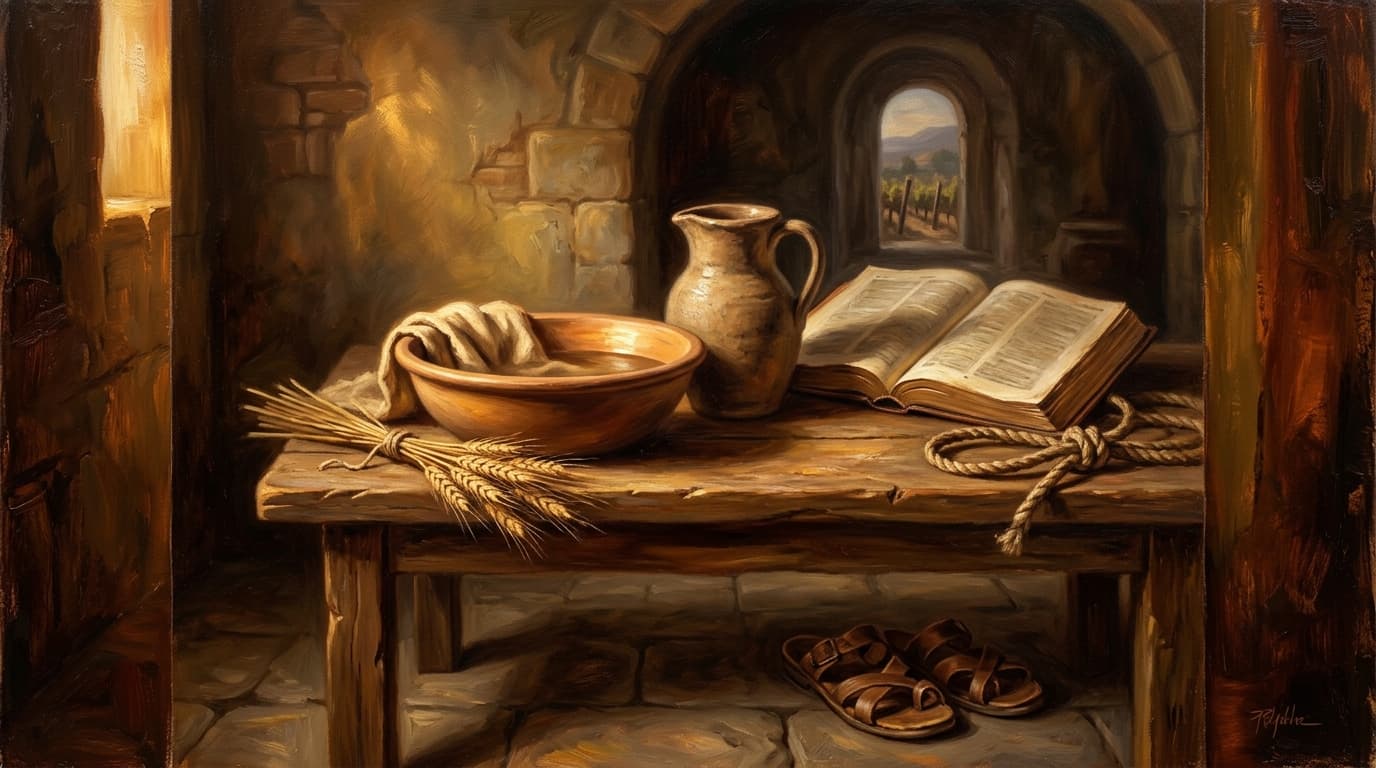
Suppose you are standing in the dim corridors of a Roman cell, listening to the Apostle Paul dictate his epistle to the Romans. You might hear him pause, consider, and then speak the words of : "And we know that in all things God works for the good of those who love him, who have been called according to his purpose." A cornerstone of Christian hope, this verse has comforted countless believers, assuring them that no matter the chaos, God orchestrates all for good. But what did Paul actually promise? And what did he not?
Context and setting of
To unravel the meaning of this profound declaration, we must first situate it within its wider context. is the crescendo of a symphony that began in the depths of human sinfulness and rises through the grace of God. Paul writes to a community familiar with suffering. Rome was a place of power and persecution. Christians there faced daily threats to their safety and faith.
In the earlier chapters, Paul explores themes of justification, sanctification, and the transformative power of the Spirit. describes the groaning of creation, yearning for redemption. It is amidst this struggle and hope that Paul assures the Roman Christians of God's providential care.
The promise and its limits
One might object that "all things work together for good" sounds overly optimistic, dismissing the harsh realities of life. But consider the nature of Paul's promise. He does not suggest that every event is good in itself, but that God can weave all events, including the painful and perplexing, into a tapestry of redemption.
Jonathan Edwards, in his Works, argues that this promise does not imply that every single event is the best possible scenario, but that all things contribute toward a divinely appointed end for those who love God. Edwards contends that while not every discrete event is ideal, in aggregate, they accomplish God's purpose for the believer.
Free will and divine sovereignty
This leads us to a classic theological tension: the interplay between free will and divine sovereignty. How can all things work for good if humans exercise free will, often contrary to God's desires? Richard Watson, in his Theological Institutes, suggests that God's grace operates mysteriously within human freedom, ensuring that even our missteps can be redirected toward divine ends. This perspective affirms human agency while upholding God's ultimate sovereignty.
The foreknowledge and predestination debate
Paul follows this assurance with a discussion of foreknowledge and predestination (). Here, another interpretive challenge arises. Does God's foreknowledge imply predestination, thereby negating human choice? The theologian John Calvin emphasized that God's foreknowledge is not causative; rather, it is God's sovereign choice that ensures the ultimate good for believers.
On the other hand, John Cassian and later Richard Watson offered a critique, emphasizing the importance of human response to God's grace. They argued that while God's purposes are steadfast, human cooperation is integral to how these purposes unfold in individual lives.
The role of suffering
Paul's letters, particularly , illuminate the refining power of suffering. He writes, "Not only so, but we also glory in our sufferings, because we know that suffering produces perseverance; perseverance, character; and character, hope." Suffering, then, is not discarded in Paul's theology but transformed into an instrument through which God achieves good.
Martin Luther famously noted that the cross is where theology becomes tangible. He suggested that true understanding of Scripture deepens in the school of suffering. It is through trials that believers are drawn closer to God's heart, experiencing His comfort and strength.
The communal aspect of the promise
One might protest that this promise feels individualistic, "for those who love God", as if isolating believers from the broader creation. However, Paul's vision in Romans is deeply communal. Creation itself is caught in the throes of labor, awaiting redemption (). The promise of "all things working for good" is not merely personal but cosmic, involving a future where creation is renewed.
N.T. Wright expands on this by suggesting that Paul's vision includes the restoration of all things through Christ. The promise encompasses not only human destinies but the redemption of all creation, aligning with God's ultimate plan.
What Paul does not promise
It is critical to address what Paul does not promise. He does not guarantee a life free of pain or trouble. Instead, his assurance is that no suffering is wasted. Even amidst trials, God is at work, weaving a story that culminates in glory.
Timothy Keller articulates this well, noting that the presence of suffering does not negate God's love but invites a deeper trust. It is a call to see beyond immediate circumstances to the eternal purposes God is fulfilling.
Living in the tension of the already and not yet
In , Paul navigates the tension between the "already" and the "not yet" of Christian life. Believers experience the firstfruits of the Spirit but await the full redemption of their bodies (). This tension requires faith that transcends sight, trusting that God is faithful to His promises.
and the character of God
Understanding requires a deep exploration of God's character, as the verse hinges on the trustworthiness of God's nature. The assurance that "all things work together for good" for those who love God and are called according to His purpose is rooted in God's omnipotence, omniscience, and benevolence. God's omnipotence ensures that He has the power to orchestrate every event in the universe according to His will. As states, "Ah, Lord God! It is you who have made the heavens and the earth by your great power and by your outstretched arm! Nothing is too hard for you." This power assures believers that no circumstance is beyond His control.
Moreover, God's omniscience means He knows the end from the beginning, as highlighted in : "declaring the end from the beginning and from ancient times things not yet done, saying, 'My counsel shall stand, and I will accomplish all my purpose.'" This divine foresight assures us that God is not surprised by any event, and He knows precisely how each piece fits into the puzzle of His divine plan. Lastly, God's benevolence, His deep love and care for His creation, confirms that His intentions are always for the good of those who trust Him. As theologian A.W. Tozer asserts, "God never hurries. There are no deadlines against which He must work. Only to know this is to quiet our spirits and relax our nerves."
These attributes collectively affirm that believers can trust in God's promise in . Our confidence in this verse is not based on a naive optimism but on the profound recognition of God's unwavering character and His ability to bring good out of all situations.
The interplay of creation and redemption in
is not an isolated assurance but is intricately linked to Paul's broader theological discourse on creation and redemption. Just a few verses earlier, Paul speaks of creation itself groaning for redemption (). The world, marred by sin, is in a state of eager anticipation for the fulfillment of God's redemptive plan. This cosmic longing frames the promise of , suggesting that God's redemptive work extends beyond individual experiences to include the restoration of all creation.
Theologian N.T. Wright emphasizes the interconnectedness of this theme by arguing that "God's purpose was always to work through humans to bring his wise, healing order to the world." In this light, is about God's ultimate plan to redeem and renew the entire cosmos through Christ, with human beings playing a pivotal role within that scope. Believers are not just passive recipients of God's promise but active participants in His redemptive mission.
Paul's vision of redemption is holistic and encompasses every aspect of life and the universe. The assurance that "all things work together for good" thus reflects a profound hope not only for personal salvation but also for the eventual renewal of all creation. This grand narrative encourages believers to live in anticipation and contribute to God's redemptive work in the world today.
The role of the Holy Spirit in fulfilling the promise
The Holy Spirit's presence and work are crucial in understanding how is realized in a believer's life. In the broader context of , the Spirit is depicted as the agent of God's transformative power, interceding for believers and guiding them according to His will (). The Holy Spirit is not only a comforter but also an active participant in orchestrating events for the good that God promises.
John Calvin, in his Institutes of the Christian Religion, highlights the Spirit's role in aligning human will with divine purposes, stating, "The Spirit is the bond by which Christ effectually unites us to himself." Through the Spirit, believers are not left to interpret or endure life's challenges on their own. Instead, the Spirit empowers them to see beyond immediate circumstances, providing wisdom and strength to trust in God's overarching plan.
The Holy Spirit also fosters a deeper relationship between believers and God, enabling them to understand and embrace their identity as God's children (). This relationship is foundational to trusting in the promise of , as it reassures believers of their place in God's family and His commitment to their ultimate good. Thus, the Spirit's work is integral to the realization of the promise, ensuring that all things indeed work together for good for those who love God.
The eschatological hope in
cannot be fully grasped without considering its eschatological dimension, its implications for the ultimate future. The promise that all things work together for good is anchored in the future hope of resurrection and eternal life with God. Paul frequently connects present sufferings with future glory, as seen in : "For I consider that the sufferings of this present time are not worth comparing with the glory that is to be revealed to us."
This eschatological perspective assures believers that God's promise extends beyond temporal experiences to an eternal reality where God's kingdom is fully realized. Theologian Jürgen Moltmann emphasizes the importance of hope in Christian theology, asserting that "hope is the expectation of the future, the anticipation of a new creation." In this sense, is a declaration of trust in God's promise to renew and restore all things, culminating in the new heavens and new earth.
Believers, therefore, are encouraged to live with an eternal perspective, recognizing that their present experiences, whether joyful or challenging, are part of a larger divine narrative that points toward God's ultimate victory over sin, death, and suffering. This hope provides a firm foundation for faith, motivating believers to endure trials with patience and expectation, knowing that their lives are woven into God's eternal tapestry of redemption.
The communal witness of God's promise
While speaks to individual believers, it also underscores the communal aspect of God's promise. The phrase "those who love God" implies a collective identity, a community bound together by faith in Christ. The early church, to whom Paul wrote, understood this promise within the context of communal life, where believers supported and encouraged one another in their spiritual journey.
Theologian Dietrich Bonhoeffer, in his work "Life Together," highlights the significance of Christian community in bearing witness to God's promises. He writes, "The physical presence of other Christians is a source of incomparable joy and strength to the believer." Within this community, believers experience the tangible expression of God's love and grace, reinforcing the truth of as they share in each other's joys and burdens.
Moreover, the communal witness of God's promise extends to the broader world. Jesus' prayer for unity among His followers in is a testament to the power of a unified community to testify to God's redemptive work. As believers embody the promise of in their shared lives, they become a living testimony of God's faithfulness and love, drawing others to the transformative power of the gospel.
In this way, the communal witness of not only strengthens individual faith but also is a beacon of hope to a world in need of redemption, inviting others to experience the goodness of God's plan for all creation.
Conclusion: A promise fulfilled in hope
As we close, imagine Paul, writing these words with a conviction born from experience. His life was a testament to the truth he proclaimed, through shipwrecks, imprisonments, and trials, he saw God's faithfulness. Yet, he too awaited the full revelation of God's promises.
invites us into a journey of trust, where the promise of "all things working together for good" becomes a beacon in the storm. It does not promise ease but assurance; not immunity from pain, but the presence of God in it. And perhaps, that is the good for which all things work together, bringing us into deeper communion with the God who calls us according to His purpose.
If you are pondering how this promise applies to your life, consider how your own story might be part of this divine tapestry. If you're wondering how suffering fits into God's plan, the answer might be closer than you think. Let the journey continue.